

Stop Revenue Leaks in Multi-Location Med Spas
Med Spa Revenue, Location Tracking, Multi-location Management
How Can Multi-Location Med Spas Track Revenue Leaks Per Location—And Stop Them?
As med spas scale from a single flagship to three, five, or ten locations, one challenge quietly erodes profitability—unseen revenue leaks at the location level. Without disciplined Location Tracking and a clear view of the client journey, even high-performing brands can lose tens of thousands of dollars per site every year. This is where a focused approach to Med Spa Revenue oversight, supported by systems like Client Revenue Flow at https://clientrevenueflow.com/, becomes essential.
Why Do Revenue Leaks Multiply As You Add Locations?
A single-location med spa can rely on hands-on oversight—the owner hears missed calls, notices empty treatment rooms, and can personally inspect the client intake process. Once you move to multi-location management, that visibility disappears. Each site develops its own habits, workflows, and shortcuts. Small inconsistencies in lead follow-up, front-desk scripting, or documentation become systemic Revenue Leaks when replicated across multiple locations.
In 2026, leading med spa groups are treating operational standardization as a core financial strategy—not just an HR initiative. Centralized scheduling, AI-assisted call handling, and integrated practice management platforms have reduced no-shows and double-bookings, but they do not, on their own, explain where Med Spa Revenue is being lost at each location. That requires precise Location Tracking of the entire client journey—from first inquiry to repeat visit and membership renewal.
📌 Key Takeaway: The more locations you operate, the more a small process gap at one site becomes a major Revenue Leak across the network.
What Does Effective Per-Location Revenue Leak Tracking Look Like?
Effective Revenue Leak tracking starts with a simple principle—every dollar of marketing spend, every lead, and every booked appointment must be traceable through the client journey. For multi-location med spas, this means separating performance by site and standardizing how results are measured. You are not just asking, “Are we growing?” You are asking, “Which location is underperforming—and why?”
Location-level attribution: Every lead and booking is tagged to a specific location, marketing source, and campaign so you can see where Med Spa Revenue is actually generated—or lost.
Standardized funnel stages: Inquiry, consult scheduled, consult completed, treatment completed, follow-up booked, membership or package sold—each step is tracked consistently across locations.
Exception-based monitoring: Instead of manually scanning reports, leadership sees alerts where metrics fall outside defined thresholds—such as low show rates or poor conversion at one site.
Systems like Client Revenue Flow are designed around this reality. By consolidating data from your CRM, scheduling tools, and marketing platforms, Client Revenue Flow makes per-location Revenue Leak tracking practical and repeatable—without adding manual reporting burden to your team. Learn more at https://clientrevenueflow.com/.
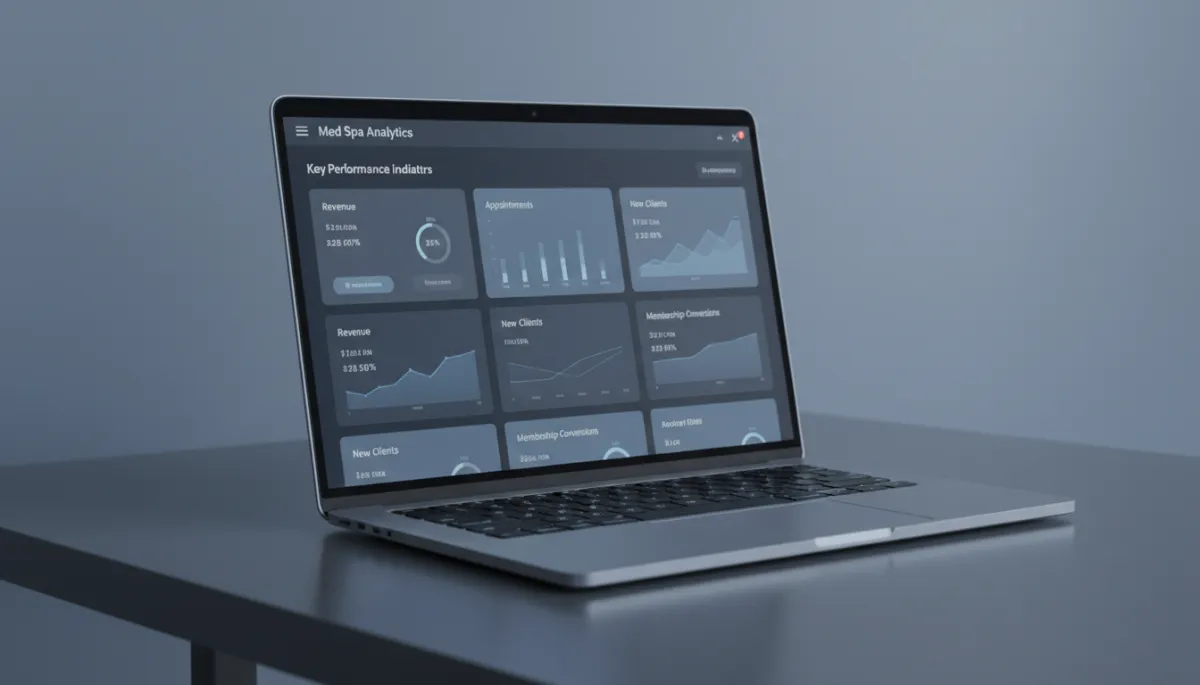
Clear per-location dashboards turn scattered data into actionable Revenue Leak insights.
Where Do Lead Follow-Up Breakdowns Create Hidden Revenue Leaks?
In most multi-location med spas, the first and largest Revenue Leak occurs long before a client walks through the door—at the Lead Follow-up stage. Marketing generates inquiries, but without disciplined and measurable follow-up, those leads quietly expire. The problem is rarely a lack of effort; it is a lack of structure and visibility across locations.
Are all leads contacted within a defined timeframe—say, 15 minutes for calls and same-day for web forms?
How many follow-up attempts are made before a lead is marked “closed” or “lost”?
Which locations convert leads to consultations at the highest rate—and which lag behind?
Without Location Tracking of these metrics, leadership may assume the issue is marketing quality, not Lead Follow-up execution. Client Revenue Flow helps monitor this stage of the client journey by tying leads to outcomes—consults booked, consults completed, and treatments performed—at each location. This reveals gaps where front-desk teams or call centers are not consistently following defined follow-up protocols.
💡 Pro Tip: Treat Lead Follow-up as a revenue-critical workflow, not an administrative task—then use data to enforce consistency across locations.
How Does the Client Intake Process Influence Med Spa Revenue Per Location?
Once a client arrives on-site, the client intake process becomes the next major control point for Med Spa Revenue. Intake is more than forms and signatures—it is where expectations are clarified, treatment plans are framed, and opportunities for memberships, packages, and add-ons are either captured or lost.
Inconsistent intake across locations leads to wildly different revenue outcomes for similar patient profiles. One location may consistently convert first-time toxin clients into multi-treatment plans, while another routinely performs single services with no plan for follow-up. The difference is not demand—it is process discipline.
Are providers and coordinators following a standardized consult and intake script at every location?
Do all sites present memberships, packages, and maintenance plans in the same structured way?
Is every treatment tied to a documented plan, with follow-up appointments booked before the client leaves?
Client Revenue Flow supports intake optimization by monitoring conversion metrics tied to intake steps—consult-to-treatment conversion, average ticket size, membership uptake, and rebooking rates. When you can compare these metrics across locations in one system, you quickly see where the client intake process is strong and where it is leaking revenue.

Standardized digital intake helps convert more first visits into long-term revenue.
How Critical Is Operational Consistency Across Locations for Revenue Protection?
Operational consistency is no longer just a brand promise—it is a financial requirement. When treatment protocols, pricing, discounting rules, and documentation standards vary by location, Med Spa Revenue becomes unpredictable and difficult to scale. Industry research shows that multi-location operators with centralized standards and documentation command higher valuations and more stable EBITDA multiples, precisely because investors trust the reliability of their cash flows.
For operators, the question is simple—can you see, in real time, whether each location is following the same playbook? Client Revenue Flow supports operational consistency by providing a unified lens on critical indicators:
Pricing and discount discipline: Tracking discount rates, promotional usage, and average realized price per service by location to identify outliers that erode margins.
Treatment plan adherence: Monitoring whether recommended treatment plans are actually completed or if clients drop off mid-course at specific locations.
Rebooking and retention: Comparing rebooking rates and visit frequency across sites to pinpoint where operational habits are driving or draining recurring revenue.
📌 Key Takeaway: You cannot enforce operational consistency you cannot measure—Location Tracking of key behaviors is the foundation of multi-location management.
How Does Client Revenue Flow Protect Marketing Spend and Improve Performance?
Med spas are investing heavily in digital advertising, influencer partnerships, and brand campaigns. Yet without a system to tie that spend to outcomes at the location level, it is impossible to know whether your marketing dollars are driving sustainable Med Spa Revenue—or being lost to operational gaps. This is where Client Revenue Flow delivers tangible value.
By integrating marketing data with operational and financial metrics, Client Revenue Flow helps you:
Gain visibility into Revenue Leaks: See exactly where leads from each campaign fall out of the funnel—no follow-up, no-show, no rebooking—at each location.
Improve performance: Benchmark locations against each other on conversion, revenue per lead, and lifetime value, then coach underperforming teams with concrete data.
Protect marketing spend: Reallocate budget away from locations or campaigns that consistently underperform due to execution issues, and double down where the full client journey is working.
Instead of debating whether “marketing is working,” leadership can review clear, per-location data that connects marketing dollars to booked revenue and retained clients. This is the essence of data-driven decision-making—and it is central to the value proposition of Client Revenue Flow at https://clientrevenueflow.com/.

Connecting marketing spend to per-location outcomes turns guesswork into strategy.
How Does Monitoring the Client Journey Reveal Gaps and Support Growth?
Sustainable growth for multi-location med spas depends on more than adding new locations—it depends on maximizing the value of every client journey at every site. That requires end-to-end visibility, from first touch to long-term retention. Client Revenue Flow is built to monitor this journey in detail, revealing gaps that traditional financial reports cannot see.
Consider the full path of a typical client:
Sees an ad or social post and submits an inquiry.
Receives Lead Follow-up and books a consultation at a specific location.
Completes intake, meets the provider, and receives a recommended plan.
Purchases services, packages, or memberships, then returns for maintenance.
At each stage, there is potential for a Revenue Leak—no response, no-show, low conversion, poor rebooking, or early churn. By monitoring this journey through Client Revenue Flow, operators can reveal specific gaps by location. For example:
Location A may excel at Lead Follow-up but underperform on membership sales, signaling a need for intake and provider training.
Location B may have strong initial sales but weak retention, pointing to gaps in rebooking habits or client communication.
Location C may show low conversion from consult to treatment, suggesting misalignment between marketing promises and on-site experience.
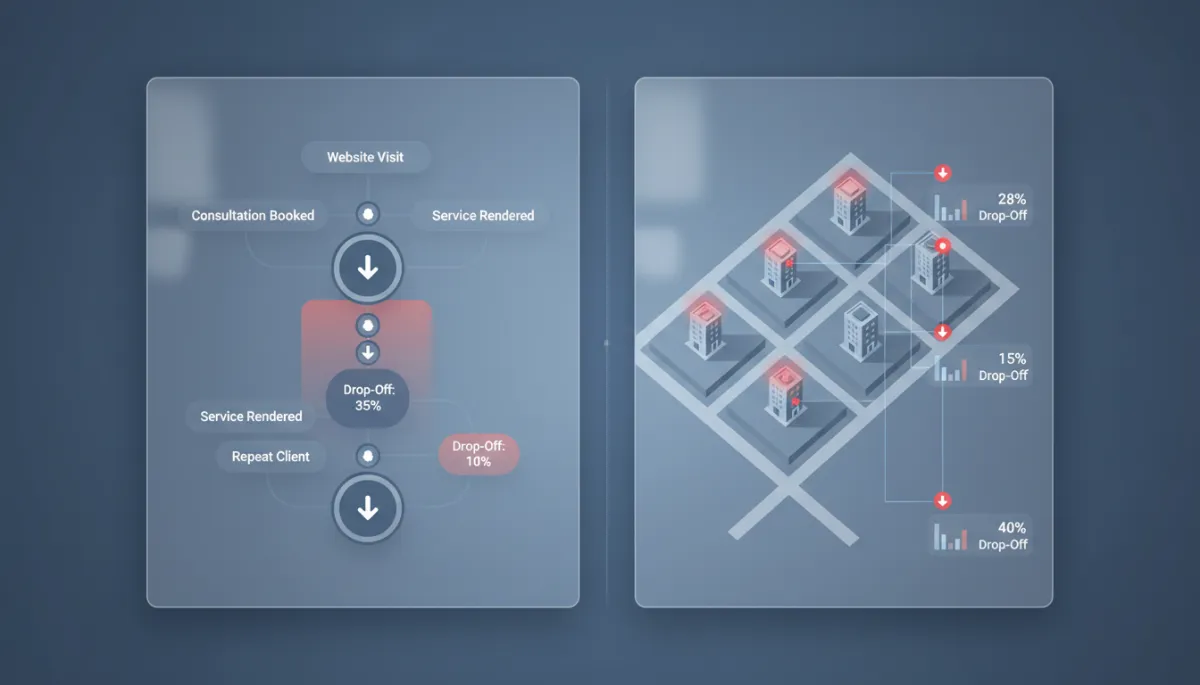
Visualizing the client journey by location exposes exactly where revenue is leaking.
This level of insight supports smarter growth decisions. Instead of expanding based on top-line enthusiasm, leadership can use data from Client Revenue Flow to:
Strengthen underperforming locations before adding new ones.
Replicate best practices from top-performing sites across the network.
Present clean, defensible performance data to investors or buyers, enhancing valuation.
How Can Your Med Spa Network Move From Guesswork to Data-Driven Decisions?
The med spa industry in 2026 rewards operators who treat operations as seriously as treatments. Multi-location management is no longer about simply opening doors in new markets—it is about building a repeatable, measurable system that protects every dollar of Med Spa Revenue. That requires clarity on three fronts: where revenue is leaking, why it is leaking, and how to fix it quickly at the location level.
Client Revenue Flow provides the infrastructure to do exactly that. By combining Location Tracking, Lead Follow-up metrics, client intake performance, and operational consistency indicators into a single, accessible platform, it enables leaders to make confident, data-driven decisions. The result is not just better reporting—it is better execution at every site, protected marketing spend, and a stronger foundation for long-term growth.
If you are serious about scaling your med spa network—or stabilizing the one you already have—start by gaining full visibility into your Revenue Leaks. Evaluate how you currently track the client journey, compare performance across locations, and connect marketing dollars to outcomes. Then explore how a purpose-built system like Client Revenue Flow, available at https://clientrevenueflow.com/, can turn that visibility into action.
📌 Final Thought: Revenue Leaks are inevitable—but with disciplined Location Tracking and the right tools, they are fully controllable. The med spas that win in the next decade will be the ones that see every leak, fix it fast, and let data—not intuition—guide their growth.
