
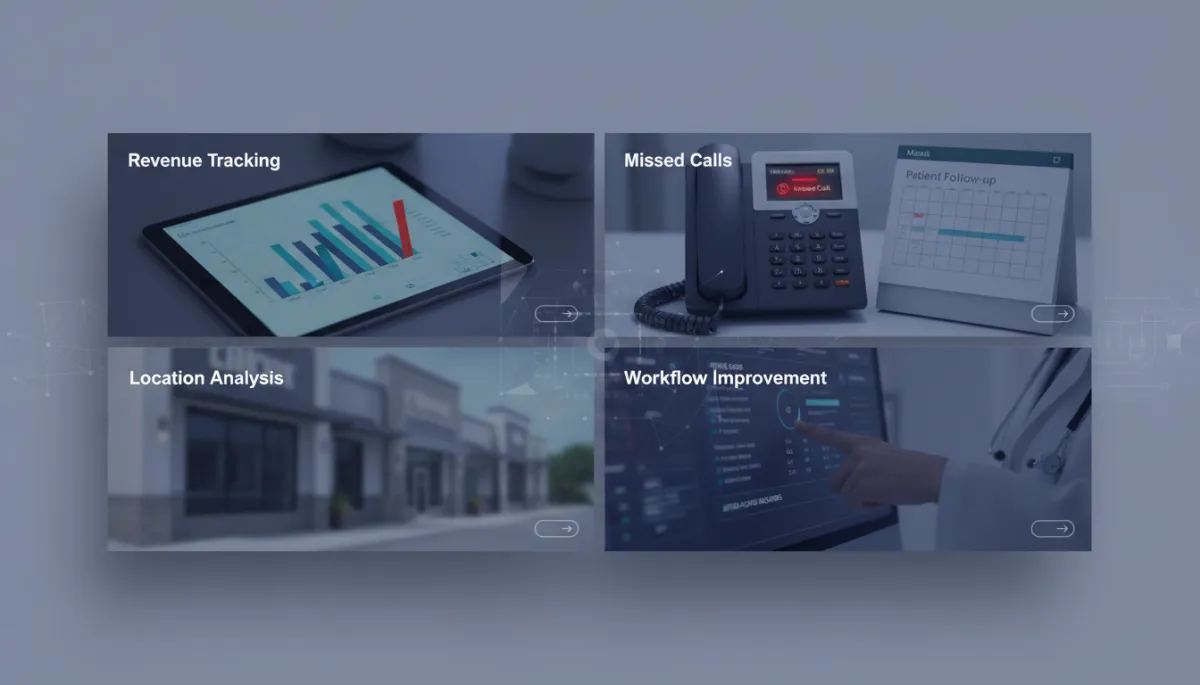
Per-Location Revenue Leak Tracking for Dental Groups
Dental Groups, Revenue Tracking, Location Analysis
Per-Location Revenue Leak Tracking for Dental Groups
For growing Dental Groups, strong top-line numbers can disguise silent revenue leaks at the office level. Without precise per-location Revenue Tracking and Location Analysis, missed calls, delayed Patient Follow-up, unscheduled treatment, and intake gaps quietly erode profitability. This article explores why granular, location-level visibility is essential—and how it helps leadership make better decisions, protect high-value leads, and build accountability without blame. To explore practical solutions as you read, visit https://clientrevenueflow.com/.
Why Group-Level Reporting Is No Longer Enough
Traditional group-level reporting aggregates performance across all locations. While this offers a high-level snapshot, it often hides critical revenue leaks. A strong-performing office can mask underperformance at another, and blended averages make it difficult to see where workflows are breaking down. As a result, Dental Groups may assume their Revenue Tracking is effective when, in reality, individual locations are struggling with missed calls, weak Patient Follow-up, and inconsistent Treatment Scheduling.
Group-level metrics answer the question, “How are we doing overall?” but they rarely answer, “Which office is leaking revenue—and why?” When leadership cannot pinpoint the specific location, time of day, or team process responsible for lost opportunities, improvement efforts become guesswork. A per-location approach to Revenue Tracking and Location Analysis changes that dynamic entirely by making each office’s performance visible, comparable, and actionable.
📌 Key Takeaway: Group-level reporting can look healthy while individual offices quietly lose thousands each month. For a clearer picture of your own locations, explore the tools at clientrevenueflow.com.
The Power of Per-Location Revenue Tracking
Per-location Revenue Tracking gives Dental Groups a clear lens into how each office handles new patient inquiries, existing patient calls, and Treatment Scheduling. Instead of staring at a single conversion rate for the entire organization, leadership can see how Location A compares with Location B on:
Call answer rates and Missed Calls during business hours and after-hours
Speed and quality of Patient Follow-up on voicemails, web forms, and referrals
Percentage of proposed treatment that remains unscheduled or repeatedly deferred
Intake gaps, including incomplete information, dropped handoffs, or patients who never make it from inquiry to appointment
With this level of detail, patterns emerge quickly. One office might excel at capturing high-value leads but struggle with timely follow-up. Another might answer nearly every call but fail to convert treatment plans into scheduled visits. Per-location tracking gives Dental Groups the insight needed to coach teams, refine workflows, and share best practices across the organization.
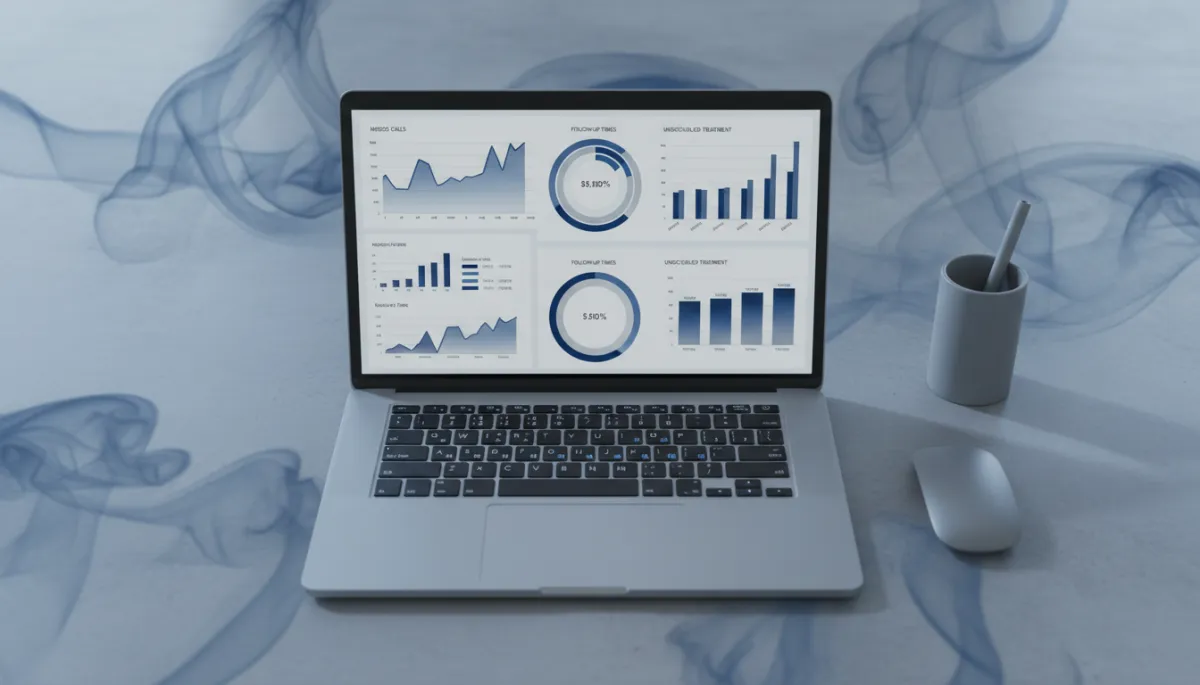
Side-by-side location metrics make it easy to see where revenue is leaking and why.
💡 Pro Tip: Start by benchmarking each office against your top-performing location. To see what this looks like in practice, visit clientrevenueflow.com and explore per-location reporting options.
Missed Calls: The Most Visible—and Costly—Leak
Missed Calls are one of the most immediate and measurable forms of revenue loss for Dental Groups. Every unanswered phone call can represent a new patient, a family of patients, or a significant treatment opportunity. Yet, without per-location call tracking, it is impossible to know which offices are consistently letting calls go to voicemail or abandon queues.
Location-level visibility allows leadership to see exactly how many calls each office misses, at what times, and on which days. For example, one office may have a spike in Missed Calls every Monday morning, while another shows a pattern during lunchtime. Armed with this data, Dental Groups can adjust staffing, implement call overflow strategies, or deploy centralized support—targeted precisely where it is needed most.
The key is to treat Missed Calls not as an individual failure but as a workflow signal. When tracked per location, they become a starting point for improvement rather than a source of frustration or blame. For tools that surface missed-call patterns clearly, visit clientrevenueflow.com and review call tracking capabilities.
Delayed Patient Follow-up: The Silent Killer of Conversion
Not every patient will connect with your team on the first attempt. Many inquiries come in through voicemails, emails, web forms, or third-party referral sources. When Patient Follow-up is delayed—even by a few hours—conversion rates drop sharply. Prospective patients may schedule with another provider, lose urgency, or simply stop responding.
Per-location tracking of follow-up times reveals how quickly each office responds to new leads and existing patient questions. Leadership can see, for example, that one location responds to new patient inquiries within 30 minutes on average, while another takes 24 hours or more. This difference directly impacts booked appointments, case acceptance, and overall revenue.
Track response times by location, channel, and lead type
Prioritize follow-up for high-value leads, such as implant or cosmetic cases
Identify workflow bottlenecks—such as messages stuck in shared inboxes or unmonitored voicemails
When follow-up performance is visible at the office level, leaders can coach teams, refine scripts, and implement clear service-level standards. To see how automated tracking and alerts can support faster follow-up, visit clientrevenueflow.com and review workflow optimization options.
Unscheduled Treatment: Turning Diagnosed Needs into Scheduled Revenue
Every Dental Group has a gap between treatment diagnosed and treatment scheduled. This unscheduled treatment represents both unserved patient needs and unrealized revenue. Without per-location tracking, it is easy to underestimate the size of this gap—or to assume it is similar across all offices.
Location-level analysis allows you to see which offices consistently leave high-value procedures on the table. For example, one office may present many implant or clear aligner cases but schedule only a fraction of them. Another may do well with routine hygiene but struggle to convert comprehensive treatment plans. When you connect Treatment Scheduling data with call and follow-up metrics, the story becomes even clearer: missed confirmations, weak financial discussions, or lack of systematic reactivation can all be identified and addressed.

Tracking unscheduled treatment by location reveals where patients need better support to say yes.
By monitoring unscheduled treatment per office, Dental Groups can design targeted training, improve financial presentation workflows, and build reactivation campaigns for patients who postponed care. To explore tools that connect treatment plans to actual scheduling behavior, visit clientrevenueflow.com and consider how deeper visibility could support your teams.
Intake Gaps Across Every Office: Where Patients Fall Through the Cracks
The patient intake process spans multiple touchpoints: initial inquiry, data collection, insurance verification, appointment scheduling, and pre-visit communication. At each step, there is potential for breakdown. Intake gaps can occur when information is incomplete, when handoffs between team members are unclear, or when patients are not guided confidently through the process.
Per-location tracking helps Dental Groups identify which offices are losing patients during intake. For example, one office might capture many initial inquiries but see a high drop-off before the first appointment is confirmed. Another may struggle with patients failing to complete digital forms or respond to reminders. When these patterns are visible, leadership can refine scripts, adjust technology, and standardize best practices across the network—without relying on anecdotal feedback alone.
📌 Key Takeaway: Intake gaps are rarely obvious from group-level data. To see exactly where patients disengage at each office, consider implementing structured intake tracking as offered by clientrevenueflow.com.
After-Hours Inquiries: The Hidden Goldmine for Dental Groups
Many Dental Groups focus on call performance during business hours, but after-hours inquiries can represent a significant share of high-intent leads. Prospective patients often call or submit forms in the evening, on weekends, or during holidays—times when they finally have a moment to address their dental concerns. If these inquiries are not captured, routed, and followed up quickly, they become another source of revenue leakage.
Per-location tracking of after-hours calls and messages enables Dental Groups to see which offices are generating late-day or overnight demand and how effectively those opportunities are handled. You may discover that one office’s patient base is particularly active after hours, suggesting a need for extended phone coverage, call routing, or automated responses that prompt quick next-day follow-up. Another office may show almost no after-hours activity, indicating a different communication pattern and requiring a different strategy.
Rather than treating after-hours inquiries as an operational nuisance, leading Dental Groups view them as a competitive advantage. With the right tracking and workflows, you can convert these inquiries into loyal patients before competitors even respond. To explore options for capturing after-hours demand at each location, visit clientrevenueflow.com and review available solutions.
High-Value Leads: Not All Opportunities Are Equal
While every patient matters, some inquiries carry significantly higher revenue potential. Implant cases, full-mouth rehabilitations, cosmetic dentistry, and multi-family appointments can dramatically influence the financial performance of each office. Yet, many Dental Groups track these high-value leads only at the group level, losing sight of how each location performs with these critical opportunities.
Per-location tracking allows leadership to see:
Which offices receive the most high-value inquiries—and from which channels
How quickly each office responds to these leads compared with routine inquiries
Conversion rates from inquiry to consultation and from consultation to accepted treatment

Separating high-value leads by location shows where advanced cases are won or lost.
With this insight, Dental Groups can route high-value leads to the most capable teams, provide specialized training where needed, and ensure marketing investments align with each office’s strengths. To learn how to prioritize and track high-value leads across locations, visit clientrevenueflow.com and explore lead management options.
Accountability Without Blame: Using Data to Support, Not Punish
One of the most important cultural benefits of per-location Revenue Tracking is the ability to create accountability without blame. When data is vague or limited to group-level reports, conversations about performance can feel personal and subjective. Team members may feel singled out, even when problems are rooted in staffing, systems, or unclear expectations rather than individual effort.
Detailed location-level visibility shifts the focus from “who is at fault?” to “what is our process producing?” Instead of criticizing front desk teams for Missed Calls or delayed Patient Follow-up, leaders can collaborate with each office to understand root causes: Is call volume outpacing staffing? Are there too many manual steps in the intake workflow? Are team members unclear about priorities for high-value leads?
When teams see that data is being used to improve systems, not to assign blame, they become more engaged in problem-solving. They are more likely to share ideas, surface issues earlier, and embrace new workflows that support better patient experiences and stronger revenue. To implement reporting that supports this kind of culture, visit clientrevenueflow.com and review how collaborative dashboards can be deployed.
How Location-Level Visibility Drives Better Decisions and Workflows
When Dental Groups embrace detailed per-location tracking, leadership gains a powerful decision-making tool. Instead of relying on intuition or anecdotal feedback, executives and regional managers can see exactly how each office is performing on Revenue Tracking, Location Analysis, Treatment Scheduling, Missed Calls, Patient Follow-up, and intake execution.
Resource Allocation: Shift staffing, marketing spend, or extended hours to locations with demonstrated demand and leakage.
Process Standardization: Identify top-performing offices and document the scripts, workflows, and follow-up cadences that drive their success.
Targeted Coaching: Provide each office with specific, data-backed feedback on Missed Calls, after-hours inquiries, high-value lead handling, and unscheduled treatment.
Strategic Growth: Use per-location performance trends to guide decisions about new locations, service expansions, and partnerships.
💡 Pro Tip: Review location-level dashboards in your leadership meetings at least monthly. To see what a robust reporting environment can look like, visit clientrevenueflow.com and explore sample workflows.
Bringing It All Together: A Strategic Advantage for Dental Groups
Per-location Revenue Tracking is no longer a “nice to have” for Dental Groups—it is a strategic requirement. Group-level reporting alone cannot reveal where Missed Calls are spiking, where Patient Follow-up is delayed, where Treatment Scheduling is inconsistent, or where intake gaps are causing patients to fall through the cracks. Nor can it show how each office handles after-hours inquiries or high-value leads that can shape the financial trajectory of the entire organization.
By investing in detailed Location Analysis, Dental Groups gain the visibility needed to protect revenue, enhance patient experience, and support teams with accountability without blame. Leadership can make better decisions, design smarter workflows, and scale what works across every office—turning hidden leaks into predictable growth.

Leadership decisions are stronger when every office’s performance is visible, comparable, and actionable.
If you are ready to move beyond blended group averages and uncover the real story behind each office’s performance, now is the time to modernize your Revenue Tracking. Explore how structured per-location reporting, call analysis, and workflow automation can support your Dental Group at https://clientrevenueflow.com/.
