

Optimize Law Firm Intake to Boost Revenue
Law Firms, Intake Optimization, Revenue Recovery, Legal Marketing
Connected Intake to Stop Law Firm Revenue Leak
Law firms rarely struggle because there are no potential clients. They struggle because too many good prospects fall through the cracks. A disconnected intake process quietly drains revenue every day—through missed calls, unanswered web forms, forgotten emails, and delayed follow-up. A connected intake system stops that leak and turns more inquiries into paying clients.
The Hidden Cost of a Disconnected Intake Process
Many firms assume they have a lead problem when what they really have is an intake problem. Marketing brings in calls, website form submissions, chat messages, referrals, and emails—but those inquiries are scattered across different systems, inboxes, and devices. No one sees the full picture, and no one owns the outcome from first contact to signed fee agreement.
That disconnect leads to revenue leaks. A missed call that never gets returned. A voicemail that sits on a desk phone over the weekend. A website form that lands in a generic email inbox. A referral that gets mentioned in a hallway conversation but never logged. Each one represents a potential case—and lifetime client value—that quietly disappears without anyone noticing.
📌 Key Takeaway: Your firm may not need more leads. It may need a better way to capture, track, and convert the leads you already have.
What Is a Connected Intake System?
A connected intake system brings every new inquiry into one organized pipeline, no matter how the potential client contacts your firm. Instead of juggling multiple inboxes and phone logs, your team sees a single, unified view of all incoming opportunities and their status. This is the foundation of modern client inquiry management.
Calls and voicemails are automatically logged, assigned, and tracked until resolved or closed.
Website forms feed directly into an intake dashboard with alerts and follow-up prompts.
Emails and referrals are captured as new matters or leads, not buried in personal inboxes.
Live chat and SMS conversations are recorded, routed, and followed up with, just like calls.
With connected intake, there is one source of truth for every inquiry, from first contact through consultation and conversion. This is how you stop revenue from slipping through small, invisible gaps in your process.
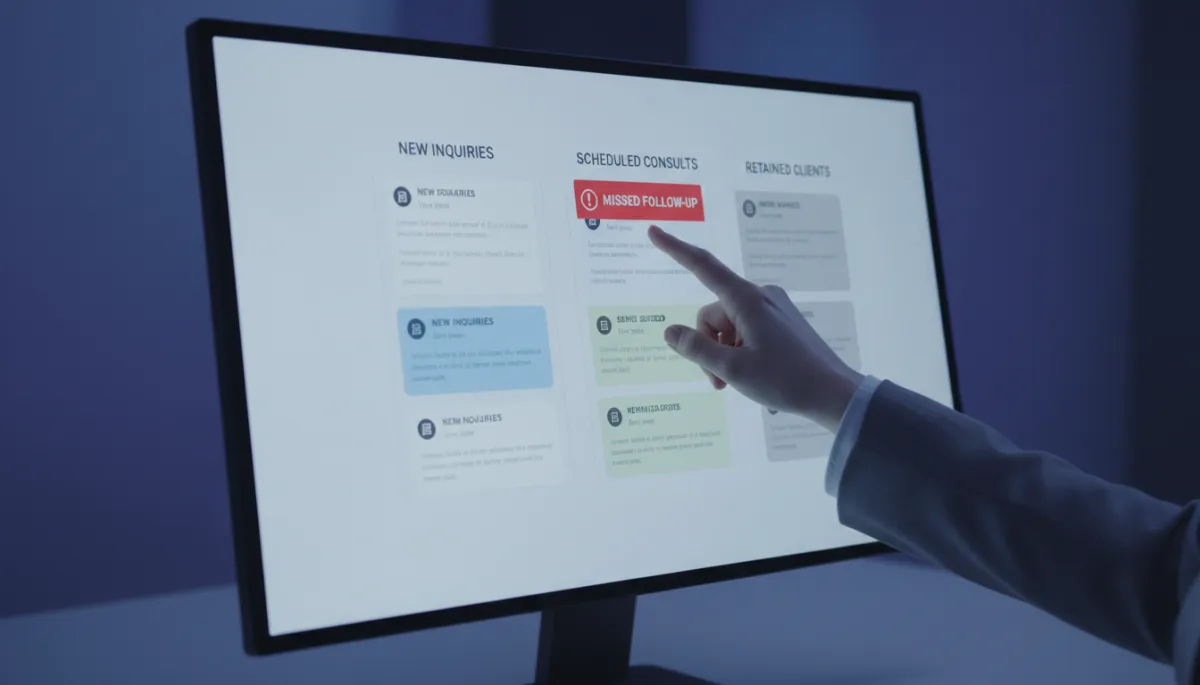
A unified intake pipeline makes every inquiry visible and accountable from day one.
Revenue Leaks Hide in the Small Gaps
Most law firm leaders notice big problems—like a major marketing channel failing—but the most damaging revenue leaks are often subtle. They happen in the everyday moments when no one is watching. Consider a few common examples:
A missed call from a seriously injured car accident victim at 7:45 p.m. that never gets a callback because the voicemail was left on the main line, not the intake line.
An unanswered web form from a business owner seeking urgent contract help that lands in a general inbox and is buried under newsletters and spam.
A delayed response to a family law inquiry where the prospect contacts three firms and hires the one that responded first and most clearly.
None of these situations show up as a line item on your profit and loss statement. But they add up. For practice areas like personal injury, a single missed case can mean tens or hundreds of thousands of dollars lost. In estate planning or business law, one missed client could have become a multi-year relationship of repeat work and referrals.
💡 Pro Tip: If you cannot quickly answer “How many inquiries did we receive yesterday, and what happened to each?” you likely have hidden revenue leaks.
Why Intake Process Optimization Matters for Every Practice Area
Different practice areas may have different client journeys, but they all rely on a strong, connected intake system to convert inquiries into matters. Optimizing intake is not just a “nice to have”—it is a competitive advantage across the spectrum of legal services.
Personal Injury: Speed and empathy are critical. A connected intake ensures injured clients receive immediate contact, clear next steps, and fast scheduling—before they call another firm or an insurer steps in with pressure.
Family Law: Prospects often reach out in moments of crisis. A reliable intake process that tracks every call, text, and form submission builds trust and shows that your firm is responsive and organized during a stressful time.
Estate Planning and Probate: Many inquiries come from referrals or word of mouth. Connected intake ensures those warm leads are never lost, and that follow-up is timely, compassionate, and well-documented for families navigating sensitive matters.
Immigration and Criminal Defense: Time-sensitive inquiries are common. Delays or missed messages can have serious consequences for clients—and your firm’s reputation. A connected system helps you respond quickly and consistently, even during high-volume periods.
Business Law: Business owners expect professional, predictable communication. Intake process optimization ensures that consultations are scheduled efficiently, conflicts are checked, and follow-ups are automated, so high-value clients feel prioritized from day one.

Every practice area benefits when intake is standardized, connected, and measurable.
The Benefits of Intake Process Optimization
When you intentionally design and refine your intake process, you gain more than just efficiency. You gain visibility, accountability, and predictable revenue. Key benefits include:
Higher conversion rates: More inquiries turn into consultations and signed clients because no one is forgotten or left waiting for a response.
Clear ownership and accountability: Each stage of intake has an owner, deadlines, and automated reminders so tasks are completed on time.
Better data for decision-making: You can see which marketing channels generate the best cases, how quickly your team responds, and where bottlenecks occur.
Consistent client experience: Prospects receive the same level of care and clarity regardless of who answers the phone or monitors the inbox that day.
📌 Key Takeaway: Optimized intake turns marketing spend into measurable revenue instead of guesswork. It becomes a revenue engine, not just an administrative function.
How AI Support Strengthens Client Inquiry Management
Modern AI support does not replace your team; it amplifies it. For busy firms, AI-powered tools can handle repetitive, time-sensitive intake tasks so humans can focus on conversations that truly require legal judgment and empathy. Within a connected intake framework, AI can:
Collect and organize client inquiries by automatically capturing details from web forms, emails, and chats, then populating intake records with names, contact information, and basic case facts.
Support appointment requests by offering available consultation times, confirming appointments, and sending reminders via email or SMS—even outside normal business hours.
Prompt follow-up by generating alerts when a prospect has not been contacted within your firm’s response-time standard, or when a consultation needs a confirmation or reschedule.
AI-driven client inquiry management is especially powerful for high-volume practices like personal injury, immigration, or criminal defense, where multiple inquiries can arrive within minutes. Instead of forcing staff to triage everything manually, AI helps prioritize and route inquiries so the right team member can respond quickly and appropriately.

AI support handles routine intake tasks so staff can focus on high-value conversations.
Law Firm Automation and Connected Intake: Working Together
Law firm automation is most effective when it is built around a connected intake strategy. Automating a broken or disconnected process simply makes mistakes happen faster. The goal is to design a clear, predictable intake journey—then use automation to execute it reliably every time.
In a connected, automated intake system, common workflows might include:
Automatically creating a new intake record when a call, form, or email arrives, with standardized fields for practice area, urgency, and referral source.
Triggering a follow-up sequence—emails, texts, or tasks—if a consultation is not yet scheduled within a defined timeframe.
Sending personalized confirmation and reminder messages before consultations, reducing no-shows and last-minute cancellations.
For practice areas like probate or estate planning, automation can include follow-up touches weeks or months later, checking whether prospective clients are ready to move forward. For business law, automated check-ins after an initial consult can re-open conversations as a company grows or new legal needs arise.
Reducing Staff Pressure While Improving Revenue Recovery
Many firms hesitate to change intake because staff already feel overwhelmed. The irony is that a disconnected, manual intake process is often the very reason your team is stressed. They are constantly reacting—digging through emails, returning calls late, and trying to remember who needs a follow-up—without the tools to manage the workload effectively.
Connected intake and automation actually reduce staff pressure by creating structure and support:
Intake staff no longer have to remember every detail; the system tracks tasks, deadlines, and next steps for them.
Attorneys are not constantly interrupted with basic scheduling or information requests that automation and AI can handle.
Managers can see workload distribution and adjust staffing or processes before burnout sets in.
The result is better morale, fewer mistakes, and stronger revenue recovery. Instead of leaving money on the table, your firm captures more of the opportunities it already earns through marketing, reputation, and referrals.
Turning Insight into Action: Next Steps for Your Firm
Stopping revenue leaks at intake does not require a complete overhaul overnight. It starts with clarity: understanding how inquiries arrive today, who handles them, and where gaps appear. From there, you can incrementally build a connected, automated system that fits your firm’s size, practice areas, and growth goals.
Map your current intake journey for each major practice area—personal injury, family law, estate planning, immigration, criminal defense, probate, and business law.
Identify all entry points: phone numbers, forms, emails, chats, and referral channels. Note where information gets lost or delayed.
Prioritize quick wins—such as centralizing web forms and call logs into a single intake dashboard, or adding automated confirmation emails and reminders.
Layer in AI support to handle repetitive tasks like appointment scheduling, basic screening questions, and follow-up prompts.
If you want expert guidance on building a connected intake system that fits your firm, visit https://clientrevenueflow.com/. You will find insights, strategies, and tools designed specifically to help law firms plug revenue leaks, optimize intake, and turn more inquiries into profitable, long-term client relationships.

When intake is connected and optimized, leadership gains clarity, control, and confidence in revenue growth.
Conclusion: Your Leads Are Valuable—Don’t Let Them Leak Away
Law firms invest heavily in marketing, reputation, and client service. Yet many lose a significant share of potential revenue not because the leads are weak, but because the intake process is disconnected. Calls, forms, emails, voicemails, referrals, and chats are scattered and untracked. Prospects wait too long for a response—or never hear back at all—and quietly hire another firm.
By building a connected intake system, embracing intake process optimization, and leveraging AI support and law firm automation, you can transform intake from a weak link into a reliable engine of growth. You improve client inquiry management, reduce staff pressure, and significantly enhance revenue recovery across personal injury, family law, estate planning, immigration, criminal defense, probate, and business law.
The opportunities are already knocking. A connected intake system ensures your firm is always ready to answer. To learn how to stop revenue leaks and create a truly connected intake experience, explore the resources at ClientRevenueFlow.com and take the next step toward a more profitable, predictable practice.
