
Maximize Revenue Recovery in Home Services
Home Services, Revenue Recovery, Lead Management, Booking Tools, Trade Business
Home Services Blog 9: Revenue Recovery Beyond Trades Booking Tools
For modern home services companies, revenue recovery is no longer just about filling the calendar. It is about capturing every qualified opportunity across calls, forms, chats, and after-hours inquiries—and then managing those leads with precision from first touch to final invoice. This is where most trade businesses quietly lose tens or hundreds of thousands of dollars each year, even while using reputable booking tools.
Why Revenue Recovery Demands More Than a Booking Calendar
Over the last few years, booking tools have become standard in HVAC, plumbing, electrical, roofing, restoration, pest control, and garage door services. They streamline scheduling, reduce back-and-forth, and give customers a digital way to request service. Yet, even with strong adoption of online booking, many operators still see gaps between lead volume and actual revenue. The problem is not the calendar itself—it is everything that happens before and after a booking attempt.
True Revenue Recovery in home services means identifying and reclaiming the income that slips away at every stage of the client journey. Standard systems tend to focus on scheduled jobs only. They rarely offer layered revenue visibility into missed calls, incomplete web forms, abandoned estimates, or unreturned messages. Without that visibility, leadership teams are managing by what is on the board, not what could have been on the board if every opportunity was handled correctly.
In 2026, leading home service operators are reframing their technology stack. Booking tools are essential, but they are only one layer in a broader Client Revenue Flow system—one that combines advanced Lead Management, AI-supported intake, and disciplined follow-up structures to prevent revenue leakage and drive sustainable business growth.
Diagnostic Audit Tool – Analyze Your Revenue Recovery Gaps
The Hidden Cost of Missed Calls and Incomplete Forms
For most trade businesses, the phone is still the primary revenue channel. But when call volume spikes during peak seasons, even the best-trained CSRs cannot answer every call in real time. Industry data consistently shows that a large percentage of homeowners will move on to the next provider if their first call is not answered quickly. Every missed call is a potential lost job, and every lost job is a direct hit to revenue recovery efforts.
In parallel, incomplete forms—where a homeowner starts to request service online but never clicks “submit”—represent another silent leak. Traditional booking tools log only completed bookings, not the number of people who began the process but dropped off. Without AI-supported tracking and remarketing, these partial leads vanish from view, even though they are often warm, high-intent prospects who simply got distracted or confused by the form flow.
A mature Lead Management framework treats missed calls and incomplete forms as high-priority revenue recovery opportunities. It automatically captures caller data, voicemail transcriptions, partial form entries, and session behavior, then routes them into structured follow-up workflows. For HVAC, plumbing, electrical, and other trades, this can translate into dozens of additional booked jobs each month without spending more on advertising.
Use the Diagnostic Audit Tool to Quantify Missed Call Revenue
After-Hours Inquiries: The New Frontier of Revenue Recovery
Homeowners rarely limit emergencies to business hours. Flooded basements, failed furnaces, electrical faults, and pest infestations often surface late at night or early in the morning. Yet many home services firms still rely on voicemail or basic answering services after hours. By the time the office opens, those leads have often booked elsewhere—especially as consumers increasingly expect instant digital responses and transparent next steps.
Modern booking trends show that customers prefer online or AI-enabled booking over phone-only systems, with the majority expecting a response within 30 minutes or less. For trade businesses, this means that after-hours inquiries are no longer “nice to have if we get to them.” They are a core component of Home Services revenue strategy. Failing to respond quickly not only loses the immediate job but can also damage long-term brand perception in local markets.
AI-supported intake can transform this reality. Intelligent virtual agents can greet after-hours callers, qualify the issue, capture detailed job information, provide preliminary time windows, and push the data into your dispatch and CRM systems. For online inquiries, AI chat and smart forms can pre-book provisional appointments, confirm contact details, and trigger automated follow-up sequences the next morning. This keeps your Client Revenue Flow active 24/7, even when your office is closed.
See How After-Hours AI Intake Can Boost Your Revenue
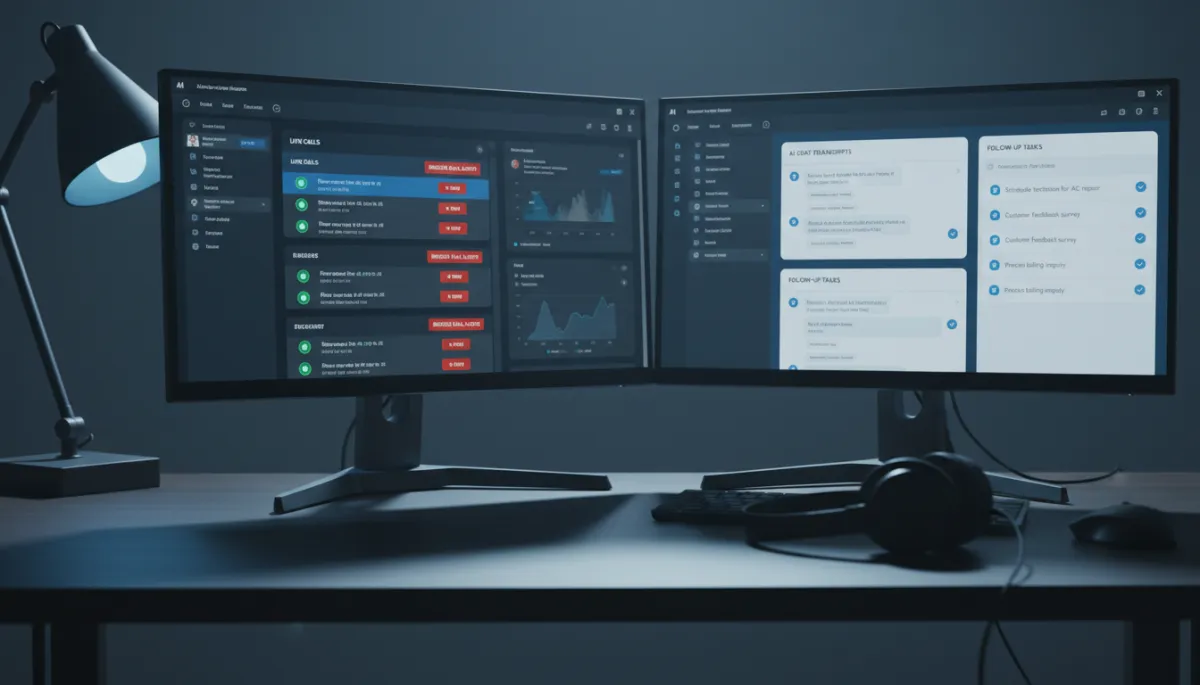
Coordinated human and AI intake can recover revenue that standard booking tools overlook.
Layered Revenue Visibility: Seeing Every Dollar on the Table
A core weakness of many booking platforms is that they report only on confirmed jobs and completed appointments. While this is useful for operations, it obscures the bigger picture of demand and revenue potential. Layered revenue visibility addresses this issue by tracking every interaction across the funnel: impressions, clicks, calls, chats, partial forms, estimates issued, estimates followed up, and jobs actually booked and completed.
For an HVAC or plumbing company, layered visibility might show that for every 100 inbound leads, 60 schedule directly through booking tools, 20 call but hang up or go to voicemail, 10 start a form but never submit, and 10 request estimates but never receive structured follow-up. Without this breakdown, leadership may assume a marketing problem—when in reality, the business is generating ample demand but failing to convert it due to intake and follow-up gaps.
When you can see each layer clearly, you can assign ownership, design processes, and apply technology where it matters most. Roofing and restoration firms, for example, often uncover substantial leakage at the estimate follow-up stage, where large-ticket jobs are lost simply because no one called back within a competitive timeframe. Pest control and garage door services may find more leakage at the missed-call and after-hours layers, where response speed is critical to consumer choice.
Run a Diagnostic Audit to Map Your Revenue Layers
AI-Supported Intake: From First Contact to Qualified Opportunity
AI-supported intake is not about replacing your team; it is about equipping them with better data and more consistent processes. In a busy trade business, CSRs must juggle multiple calls, chats, and system screens while trying to qualify issues, check availability, and reassure stressed homeowners. AI can quietly handle many of the repetitive tasks, ensuring that nothing falls through the cracks and that every opportunity is logged as a lead, not just as a conversation.
For example, AI can listen to live calls, transcribe them in real time, and automatically tag key details: system type, urgency, location, and budget indicators. It can then recommend next best actions—such as scheduling a diagnostic visit, offering a maintenance plan, or escalating to a senior technician. When combined with intelligent forms and chat, AI intake ensures that whether a lead comes in via phone, web, or social, the data structure and follow-up logic remain consistent across channels.
This consistency is essential for Lead Management at scale. In multi-trade operations that handle HVAC, plumbing, and electrical under one brand, AI can route leads to the right team automatically, track cross-trade opportunities, and highlight cases where a single household may be a candidate for multiple services. The result is a more predictable Client Revenue Flow and a higher return on every marketing dollar invested.
Explore AI-Supported Intake with the Diagnostic Audit Tool

Layered visibility reveals where revenue is leaking and where recovery efforts should focus.
Follow-Up Structures: Turning One-Time Leads into Long-Term Revenue
Many home services businesses assume that if a lead does not book immediately, it is lost. In reality, a large portion of homeowners simply need a reminder, more information, or a better-timed outreach. Effective follow-up structures are at the heart of revenue recovery because they systematically convert “not yet” into “booked” without relying on memory or manual spreadsheets that are easy to forget or misplace.
For example, a roofing company might set up automated sequences for inspection estimates: one follow-up call within 24 hours, a text reminder after 72 hours, and an educational email about financing options if the proposal remains unsigned after a week. A pest control firm could implement quarterly reminders and seasonal campaigns for recurring treatments, ensuring that initial one-time jobs evolve into predictable, subscription-like revenue streams over time.
When these follow-up structures are integrated with your booking tools and AI intake, they become even more powerful. The system can automatically re-open leads when warranties are about to expire, when seasonal maintenance is due, or when a homeowner revisits your website. This closes the loop between marketing, operations, and finance, creating a continuous cycle of engagement that supports sustainable business growth across all your trades.
Diagnose Your Follow-Up Gaps with the Audit Tool
Beyond Booking Tools: Designing a Client Revenue Flow System
Booking tools will always be an essential part of the technology stack for HVAC, plumbing, electrical, roofing, restoration, pest control, and garage door services. However, they should be viewed as one component of a broader Client Revenue Flow system rather than the entire solution. That system should be intentionally designed around revenue recovery principles, not just operational convenience or technician utilization.
A comprehensive approach typically includes: multi-channel lead capture, AI-supported intake and triage, layered revenue visibility dashboards, structured follow-up sequences, and clear ownership for every stage of the funnel. When these elements are aligned, your business can adapt quickly to market shifts, seasonal demand spikes, and changing customer expectations around responsiveness and transparency, all while maintaining a strong focus on profitability per lead.
For agencies serving home services brands, this perspective is equally important. Your value is not just in generating more leads, but in helping clients convert and retain those leads more effectively. By emphasizing revenue recovery, lead management discipline, and intelligent booking strategies, you position yourself as a growth partner rather than just a marketing vendor.
Start Designing Your Client Revenue Flow at ClientRevenueFlow.com

Aligning field operations with lead management closes the loop from intake to revenue.
Turning Revenue Recovery into a Competitive Advantage
In crowded local markets, many home services providers compete on similar pricing, similar response times, and similar marketing channels. What separates the top performers is not just how many leads they generate, but how effectively they protect and grow the revenue tied to each lead. By focusing on missed calls, incomplete forms, after-hours inquiries, and structured follow-up, you move from a reactive posture to a proactive, data-driven model of growth.
When your organization embraces layered revenue visibility and AI-supported intake, you gain the ability to test and refine your processes continuously. You can see, in real time, how changes to scripting, staffing, or scheduling impact conversion rates and average ticket value. This level of insight allows you to allocate resources more intelligently, prioritize the highest-value opportunities, and confidently invest in new marketing or service lines knowing that your intake and follow-up systems can support the additional volume.
For trade businesses and agencies alike, the message is clear: Revenue Recovery is not a one-time project. It is an ongoing discipline that, when supported by the right tools and processes, becomes a durable competitive advantage. Booking tools will continue to evolve, but the organizations that win will be those that look beyond the calendar and design for full-funnel, end-to-end Client Revenue Flow.
Use the Diagnostic Audit Tool to Turn Revenue Recovery into Growth
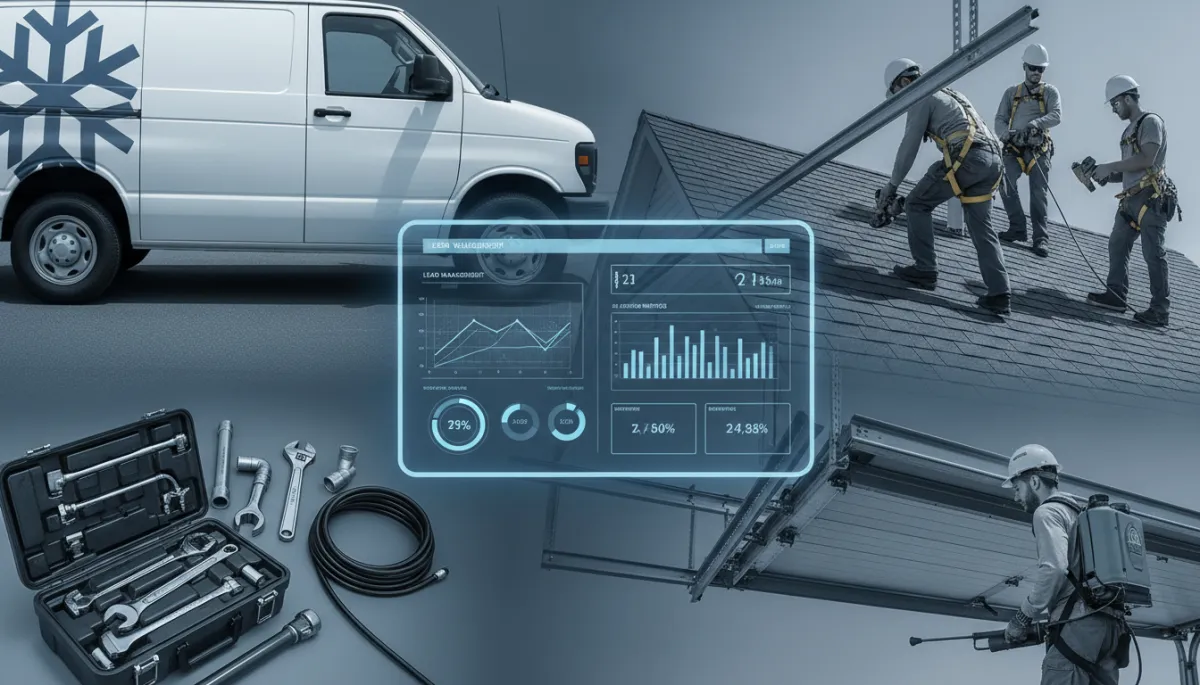
Multi-trade businesses gain the most when every channel feeds a unified revenue system.
