
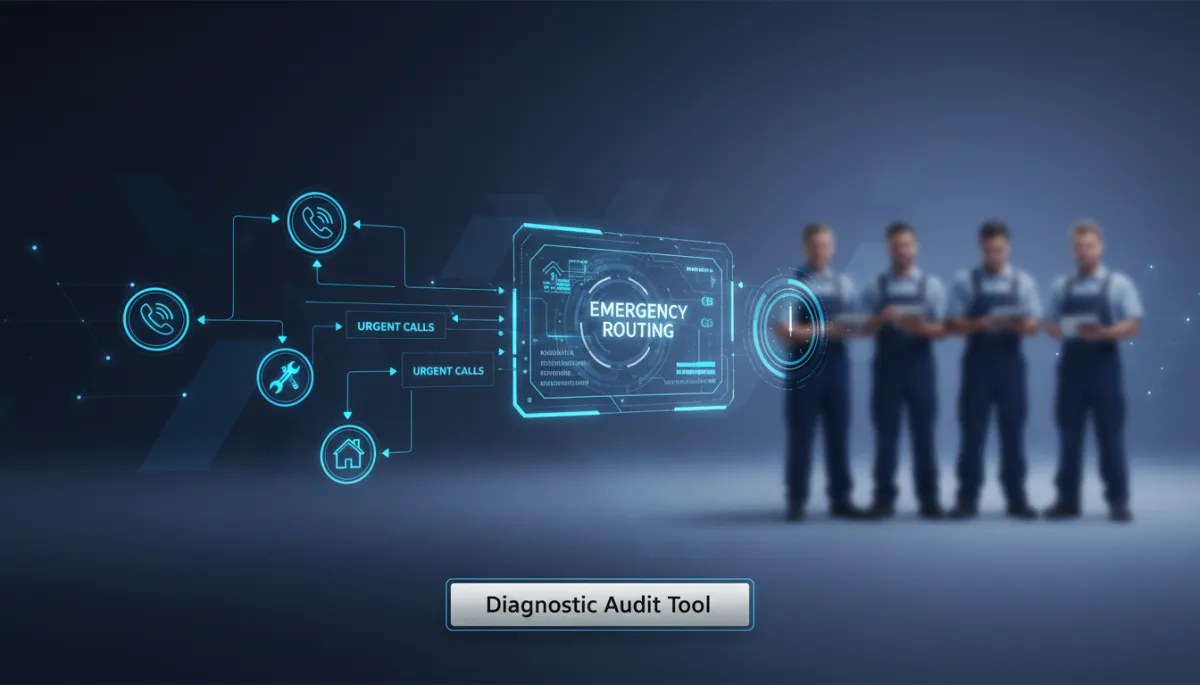
Emergency Call Routing for Home Services
Call Management, Emergency Routing, Home Service Teams
Emergency Call Routing for Home Service Teams: Turning Urgent Calls into Rapid Revenue
When a customer has water pouring through a ceiling, a furnace that has failed in freezing weather, or a security system offline in the middle of the night, every second counts. For home service businesses and agencies that support them, Emergency Routing and Urgent Call Handling are no longer “nice-to-have” features in Call Management—they are core capabilities that protect reputation, improve Service Team Efficiency, and drive revenue in the moments that matter most.
High-priority Home Service Calls are fundamentally different from routine inquiries. They are emotionally charged, time-sensitive, and often tied directly to safety, property damage, or comfort. Without a system that can identify these calls in real time, collect the right information, and route them accurately to the right responder, businesses risk missed opportunities, slow Customer Response Time, and costly revenue leakage—especially during seasonal spikes and after-hours surges in demand.
This article explores how a modern, organized emergency call routing framework transforms raw inbound demand into structured, actionable work for your teams. By focusing on call prioritization, intelligent routing, and information capture, you can support rapid response, protect customer loyalty, and accelerate revenue recovery when systems fail, weather hits, or volumes spike without warning.
To see how well your current call flow supports emergency routing and urgent call handling, visit ClientRevenueFlow.com and assess your system compatibility in minutes.
Why Emergency Routing Is Mission-Critical for Home Service Providers
In home services, the first call is often the only chance you have to win or lose a job. Emergency Routing ensures that when a customer indicates an urgent issue—such as a gas smell, burst pipe, power outage, or failed HVAC unit—the call is not treated like a generic inquiry. Instead, it is instantly recognized as high priority and moved into a specialized handling path designed for speed and clarity, rather than a standard queue that might delay response by minutes or even hours.
This level of precision is especially vital during seasonal spikes, when call volumes can double or triple overnight. Think of the first cold snap of winter, the heatwave that drives AC failures, or the storm that knocks out power and floods basements. Without structured emergency routing, your team is forced to triage manually, listening to voicemails, scanning emails, and juggling incoming calls—all while customers grow increasingly frustrated and start dialing your competitors. A robust routing engine keeps these high-priority Home Service Calls at the front of the line, even when your phone lines are overwhelmed.
Equally important is the role of emergency routing in after-hours coverage. When office staff are gone and on-call technicians are in the field or at home, a well-designed system can still capture every urgent request, filter out non-critical calls, and route only true emergencies to the right on-call resource. This not only preserves Service Team Efficiency and prevents burnout, but also ensures that genuine emergencies receive a rapid response instead of being lost in a generic voicemail inbox overnight.
If you are unsure whether your current call paths distinguish true emergencies from routine inquiries, visit ClientRevenueFlow.com to review how your systems stack up against best practices.
The Role of Urgent Call Handling in Modern Call Management
Urgent Call Handling is the operational layer that sits on top of emergency routing. While routing determines where the call should go, urgent handling defines how that call is treated from the moment it enters your system. In a mature Call Management environment, urgent calls trigger distinct workflows—shorter menus, priority queues, specialized scripts for agents, and real-time alerts to dispatchers or field supervisors—ensuring that nothing slows down the path from call to action.
Effective urgent handling is also about Customer Response Time. Customers facing an emergency are not just measuring how quickly a technician arrives; they are also judging how fast their call is answered, how clearly the situation is understood, and how confidently your team responds. A system that automatically escalates urgent calls, bypasses unnecessary steps, and provides staff with structured prompts allows your agents to reassure customers, gather details, and commit to next steps in a matter of seconds, not minutes.
From a leadership perspective, this is where Service Team Efficiency and customer experience converge. When urgent calls are handled through a defined process, you reduce guesswork, shorten call durations, and minimize repeat calls for clarification. Technicians receive cleaner job information, dispatchers can see priorities at a glance, and managers have visibility into how well the team is responding to spikes in emergency demand. The result is a more predictable operation that can scale without compromising service quality or eroding margins.
Evaluate whether your urgent call handling workflows support fast, confident responses. Use the tools at ClientRevenueFlow.com to assess compatibility with structured emergency workflows.

Structured urgent call handling gives dispatchers instant clarity on priority and next steps.
Capturing High-Priority Home Service Calls During Seasonal Spikes
For many home service organizations, a significant share of annual revenue is generated in just a few peak weeks each year. Whether you manage HVAC, plumbing, electrical, restoration, or security services, seasonal spikes drive a surge of high-intent, high-value inbound calls. In these windows, missed calls are not simply customer service failures; they represent direct, measurable losses in revenue recovery that may not be recaptured once the weather stabilizes or immediate urgency passes.
A well-configured emergency routing framework makes it possible to automatically prioritize these high-priority Home Service Calls even when your lines are saturated. By using rules that identify keywords, menu selections, or caller behavior, your system can place urgent calls ahead of routine scheduling inquiries, warranty questions, or administrative requests. This ensures that the customers most ready to purchase emergency services are served first, maximizing both Customer Response Time and conversion rates during your busiest days.
Importantly, this approach protects your teams from chaos. Instead of scrambling to answer every call in the order it arrives, your staff work from an ordered queue that surfaces the most critical issues first. This structured environment protects Service Team Efficiency, reduces stress, and allows managers to make smarter staffing decisions based on real-time visibility into emergency versus non-emergency demand.
As seasonal peaks approach, confirm that your routing rules are ready. Visit ClientRevenueFlow.com to explore how your systems can be tuned for high-demand periods.
After-Hours Coverage Without Compromising Efficiency
Emergencies rarely respect business hours. For home service companies, after-hours calls often represent the most urgent and highest-value work: late-night leaks, weekend outages, or security failures that cannot wait until morning. Yet many organizations still rely on generic voicemail, basic answering services, or manual on-call rotations that fail to distinguish between true emergencies and issues that can safely be addressed during the next business day.
With intelligent emergency routing in place, after-hours coverage can be both responsive and sustainable. Call flows can be designed to ask targeted questions—such as whether there is active flooding, a total loss of heat or cooling, or a security risk—and then use those responses to classify the call. True emergencies are escalated immediately to on-call technicians or supervisors, while non-urgent calls are acknowledged, logged, and scheduled for follow-up without waking your team unnecessarily. This balance preserves Service Team Efficiency while still delivering a rapid response when it genuinely matters.
From a financial perspective, structured after-hours routing also supports consistent revenue recovery. By capturing every urgent opportunity—even outside of standard operating hours—you reduce the risk of customers calling competitors or resorting to temporary fixes that delay professional service. Every properly triaged emergency represents not only immediate revenue, but also a chance to build long-term loyalty with customers who remember that your business was there when they needed help most.
Review how your after-hours calls are currently handled and where gaps may exist. Use the resources at ClientRevenueFlow.com to benchmark your approach against structured emergency routing models.

Smart after-hours routing ensures real emergencies reach the right on-call technician immediately.
The Power of an Organized System That Collects Key Information
At the heart of effective emergency routing is an organized system that collects key information consistently and accurately. When a customer calls in distress, your process should guide them—and your agents—through a concise set of questions that capture the essentials: location, nature of the issue, immediate risks, access details, and basic contact information. These data points become the foundation for routing decisions, technician preparation, and accurate time and cost estimates, all of which support a smoother customer experience and more predictable operations.
Without structured data capture, your team is forced to interpret vague descriptions, call customers back for clarification, or dispatch technicians with incomplete information. This slows Customer Response Time, leads to misrouted jobs, and undermines Service Team Efficiency as technicians arrive on-site unprepared for the true scope of work. In contrast, a disciplined information collection process empowers dispatchers to match the right skill set, tools, and time slot to each emergency, reducing repeat visits and increasing first-time resolution rates.
Over time, the data gathered through this organized system also becomes a valuable strategic asset. Patterns in emergency call types, timing, and geography can inform staffing, training, inventory planning, and marketing decisions. You gain a clearer picture of where your emergency demand originates and when it peaks, enabling you to align resources with real-world needs and further enhance revenue recovery from urgent service lines.
Consider whether your current intake process reliably captures the information your teams need. Visit ClientRevenueFlow.com to explore how structured data collection can integrate with your existing systems.
Accurate Routing as the Engine of Rapid Response and Revenue Recovery
Collecting the right information is only half the equation; the other half is the ability to route calls accurately based on that information. Accurate routing means that each emergency call is directed to the appropriate destination the first time—whether that is a specialized dispatcher, a specific service line, an on-call technician, or a partner organization. This precision is what unlocks true rapid response, minimizing handoffs, transfers, and delays that frustrate customers and waste internal resources.
When routing is inaccurate or inconsistent, the consequences ripple across your operation. Calls bounce between departments, customers repeat their story multiple times, and technicians receive jobs outside their expertise or territory. This not only erodes Customer Response Time, but also drives up operational costs and reduces the number of high-value jobs your team can complete in a given day. In contrast, accurate routing aligns demand with capacity, allowing you to handle more emergencies with the same or fewer resources while preserving service quality.
From a financial standpoint, accurate routing is a direct driver of revenue recovery. Every correctly routed emergency call represents a job that is more likely to be accepted, completed efficiently, and billed appropriately. Over weeks and months, these incremental gains compound into significant improvements in top-line revenue and bottom-line profitability, especially in high-margin emergency service categories where speed and reliability command premium pricing.
Analyze how often your emergency calls are transferred, delayed, or misrouted. Use the evaluation options at ClientRevenueFlow.com to see how more accurate routing could improve your results.
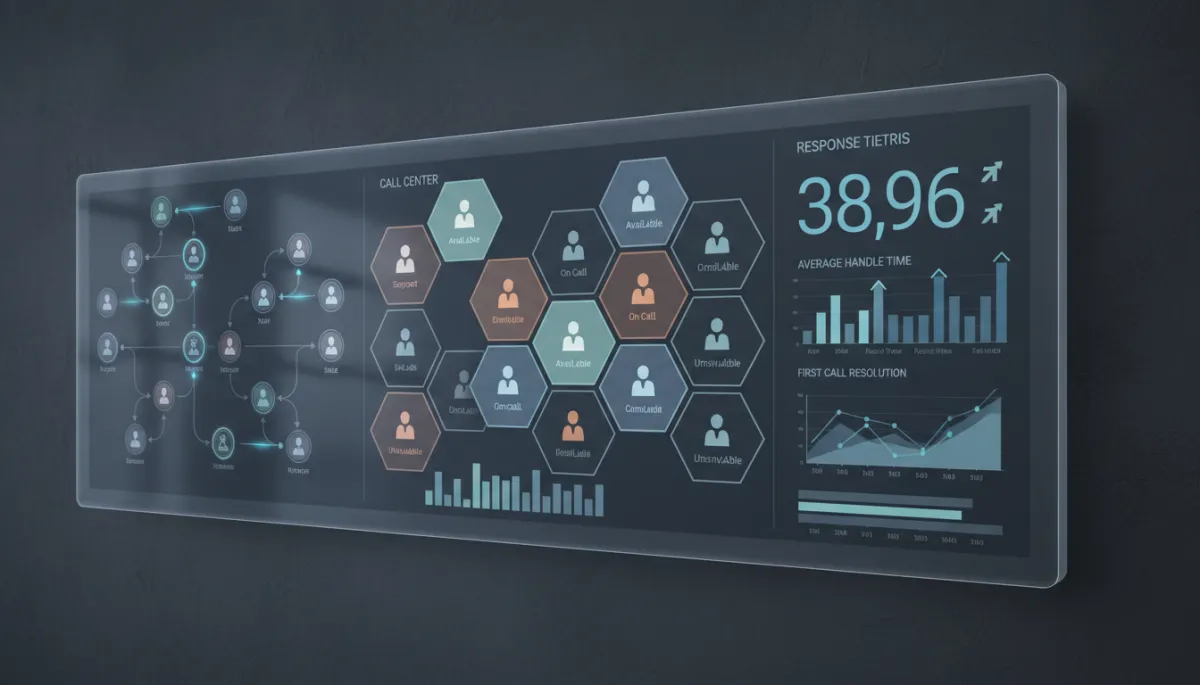
Real-time routing analytics reveal where emergency calls are won, delayed, or lost.
Building a Call Management Framework That Scales with Your Business
For agencies and multi-location home service organizations, the challenge is not just to manage today’s emergency calls, but to build a Call Management framework that can scale as you grow. This means designing routing logic, urgent handling workflows, and information capture processes that are consistent across locations, yet flexible enough to reflect local service areas, technician skills, and on-call schedules. When done correctly, this framework becomes a competitive advantage that supports faster expansion, smoother acquisitions, and more predictable performance across your portfolio.
Central to this scalable framework is a shared commitment to Emergency Routing and Urgent Call Handling as strategic capabilities, not just operational details. Leadership must align on clear definitions of what constitutes an emergency, how priorities are set, and which metrics—such as Customer Response Time, first-contact resolution, and emergency conversion rate—will be used to measure success. With this clarity, you can standardize best practices, train teams effectively, and continuously refine your processes based on real-world performance data.
Ultimately, a scalable call management framework ensures that as call volumes rise, service lines expand, or new markets are added, your ability to handle high-priority Home Service Calls does not degrade. Instead, your systems, teams, and processes work together to maintain high Service Team Efficiency, fast response, and reliable revenue recovery—no matter how complex your operation becomes.
If you are planning growth or managing multiple locations, now is the time to validate your emergency call framework. Visit ClientRevenueFlow.com to assess how well your systems can scale with increasing demand.

Aligning leadership around emergency routing transforms call handling into a strategic asset.
Moving from Reactive to Proactive Emergency Call Management
Many home service businesses still operate in a reactive mode, adjusting their call handling on the fly when storms hit, systems fail, or phones suddenly light up. By investing in structured Emergency Routing, disciplined Urgent Call Handling, and an organized system that collects key information and routes calls accurately, you can move decisively into a proactive posture. Instead of scrambling, your teams execute a tested playbook that protects Customer Response Time, elevates Service Team Efficiency, and maximizes revenue recovery when demand is highest.
The transition does not have to be disruptive. Many improvements can be layered onto existing phone systems, CRMs, and dispatch tools, using configuration changes, refined scripts, and better routing rules rather than wholesale replacements. The key is to start with a clear understanding of your current state—where calls are delayed, where information is lost, and where high-priority Home Service Calls slip through the cracks—and then systematically address those gaps with targeted enhancements to your call management processes.
In doing so, you not only protect your business during seasonal spikes and after-hours surges, but also elevate your brand as a reliable, responsive partner in moments of stress for your customers. Over time, this reputation becomes a powerful differentiator, driving repeat business, referrals, and stronger margins across all of your service lines.
Now is the ideal moment to take a structured look at your emergency call routing and urgent handling capabilities. Visit ClientRevenueFlow.com to use the button bar and access the Diagnostic Audit Tool, and determine how compatible your current systems are with a truly modern, revenue-focused call management approach.
