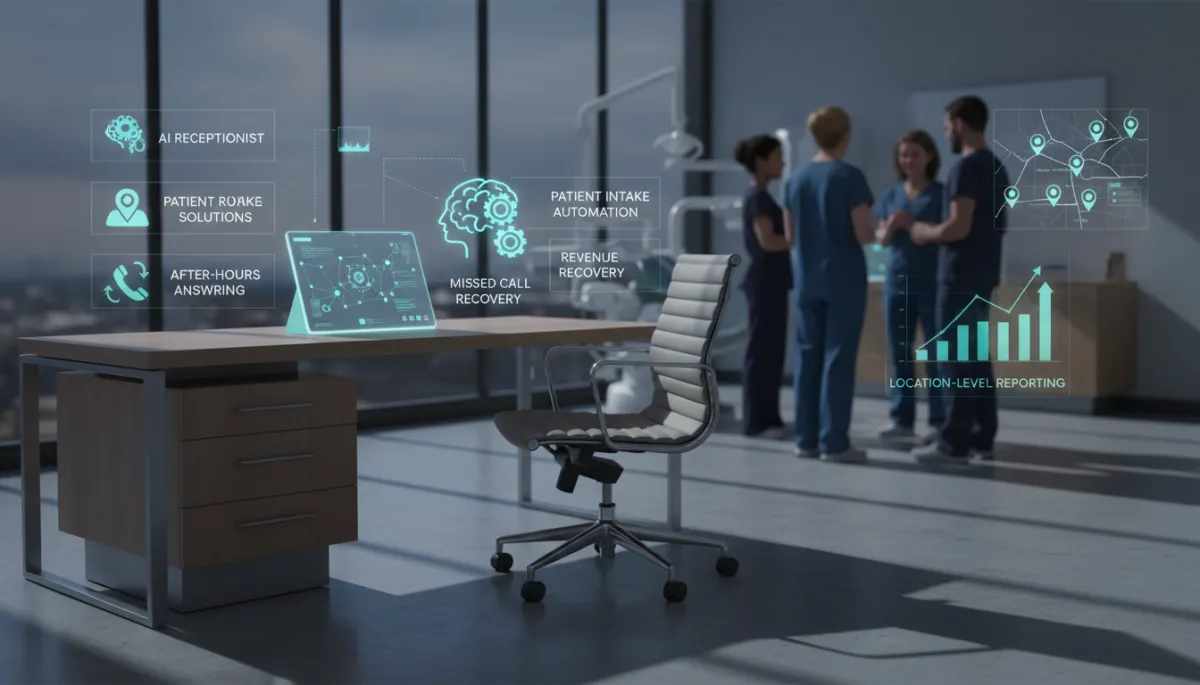
AI Receptionist Options for Dental Groups
AI Receptionist, Lead Routing Solutions, Patient Intake Automation, After-hours Answering
CRF Blog 14: AI Receptionist Options for Dental Groups
Suggested SEO title: AI Receptionist Options for Dental Groups: Missed Call Recovery, Lead Routing, and Revenue Capture. Suggested slug: crf-blog-14-ai-receptionist-options-for-dental-groups. Suggested meta description: Explore AI receptionist options for dental groups, from missed call recovery and after-hours answering to patient intake automation, lead routing solutions, and revenue recovery with location-level reporting.
Why AI Receptionists Matter for Dental Groups in 2026
As a senior software engineer working with healthcare workflows, I see multi-location dental groups facing the same constraints repeatedly: high call volume, fragmented front-office processes, and limited visibility into which locations are actually converting patient demand into production. Modern AI Receptionist platforms are no longer simple chatbots; they are multi-channel orchestration layers that combine After-hours Answering, Missed Call Recovery, Patient Intake Automation, and Lead Routing Solutions into a single, measurable system of record for patient communication and revenue recovery.
Vendors like Dental Intelligence, RevenueWell, and HeyGent Dental AI demonstrate where the market is heading: 24/7 coverage, real-time integration with Dentrix, Open Dental, Eaglesoft, and Curve, plus analytics that quantify recovered revenue and no-show reduction (Dental Intelligence, 2026; DentalBase, 2026).
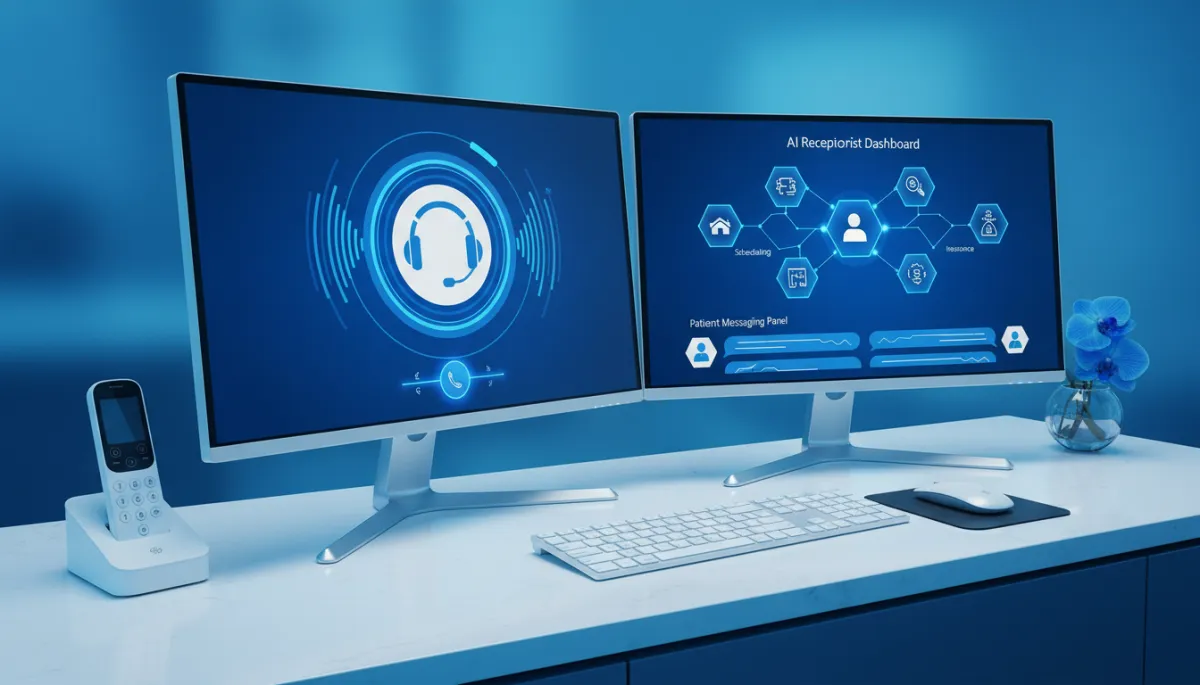
AI receptionists centralize calls, texts, and chats into one workflow-aware console.
Missed Call Recovery: Turning Lost Calls into Booked Revenue
Missed calls during lunch, peak hours, or after closing are one of the most expensive leak points in a dental group. Industry data shows 30–50% reductions in missed calls and significant recovered production when AI-based Missed Call Recovery is deployed (DentinCloud, 2026). Solutions like Recova Tech, DentDesk, and CallSmile detect missed calls in real time, trigger outbound callbacks or SMS with booking links, and log outcomes into a central dashboard for ROI tracking.
💡 Engineering perspective: Treat missed-call workflows as event streams. When a missed_call event fires from your VoIP system, an AI service should immediately decide whether to auto-text, auto-call, or queue for human follow-up, while logging every step for location-level reporting.
After-hours Answering and 24/7 Coverage
By 2026, patients expect consumer-grade access to care. After-hours Answering is now table stakes. AI receptionists from Dental Intelligence and HeyGent operate 24/7, answering common questions, triaging emergencies, and booking appointments directly into the practice management system. For dental groups, this means every location can offer consistent overnight coverage without hiring separate night teams, while all interactions remain auditable and attributable to the correct office.
Patient Intake Automation and Text Follow-up Workflows
Patient Intake Automation is one of the most mature capabilities in AI Receptionist platforms. Systems collect demographics, insurance details, and chief complaints via voice or SMS, then push structured data into the PMS. Combined with automated text follow-up, this eliminates manual data entry and ensures every new lead is nurtured until they either book or clearly opt out. Platforms like Kline and DentiVox extend this to unscheduled treatment follow-up and recall campaigns, improving case acceptance and hygiene re-care.
interface PatientIntakePayload {
  locationId: string;
  channel: 'voice' | 'sms' | 'web';
  patientName: string;
  phone: string;
  email?: string;
  insuranceProvider?: string;
  chiefComplaint?: string;
  preferredTime?: string;
}

async function handleIntake(payload: PatientIntakePayload) {
  // 1. Persist intake event for location-level reporting
  await analyticsClient.track('patient_intake_started', {
    locationId: payload.locationId,
    channel: payload.channel,
  });

  // 2. Push structured data into PMS
  const pmsPatientId = await pmsClient.createOrUpdatePatient({
    name: payload.patientName,
    phone: payload.phone,
    email: payload.email,
    insuranceProvider: payload.insuranceProvider,
    notes: payload.chiefComplaint,
  });

  // 3. Trigger automated text follow-up with booking link
  await messagingClient.sendSms({
    to: payload.phone,
    templateId: 'new_patient_intake_completed',
    variables: {
      name: payload.patientName,
      bookingUrl: buildBookingUrl(payload.locationId, pmsPatientId),
    },
  });

  return { pmsPatientId };
}
In this example, every intake event is tagged with a locationId, making it trivial to later compute conversion and revenue per office, not just at the group level.

Automated intake and text follow-up reduce manual data entry and no-shows.
High-value Lead Routing Solutions and Patient Reactivation
Not all leads are equal. Implant, clear aligner, and full-arch consults can be worth tens of thousands of dollars in lifetime value. Effective Lead Routing Solutions use AI to classify intent and urgency, then route high-value leads to the right team member or location in real time. Platforms like HeyGent and CallerCrest already score calls, detect implant-related keywords, and escalate to on-call coordinators or specific clinics with open chair time.
Similarly, patient reactivation uses outbound AI-driven campaigns to contact overdue or inactive patients via text and voice. DentiVox, Kline, and multi-agent systems like Savvy Agents automate recall, unscheduled treatment follow-up, and review collection, uncovering substantial latent production (Kline, 2026; DentiVox, 2026).
type LeadType = 'hygiene' | 'emergency' | 'implant' | 'aligner';

function classifyLead(transcript: string): LeadType {
  const text = transcript.toLowerCase();

  if (text.includes('implant') || text.includes('all-on-4')) {
    return 'implant';
  }

  if (text.includes('invisalign') || text.includes('clear aligner')) {
    return 'aligner';
  }

  if (text.includes('pain') || text.includes('swelling') || text.includes('broken tooth')) {
    return 'emergency';
  }

  return 'hygiene';
}

async function routeLead(locationId: string, transcript: string) {
  const type = classifyLead(transcript);

  await analyticsClient.track('lead_classified', {
    locationId,
    type,
  });

  switch (type) {
    case 'implant':
    case 'aligner':
      return routingClient.assignToTeam('treatment_coordinator', { locationId, type });
    case 'emergency':
      return routingClient.assignToTeam('emergency_pool', { locationId });
    default:
      return routingClient.assignToTeam('standard_front_desk', { locationId });
  }
}
This simple pattern illustrates how AI-driven Lead Routing Solutions can prioritize high-value cases while still logging metrics per location for downstream revenue attribution.
Hybrid Support: Blending AI Receptionist and Human Expertise
The most effective dental group deployments use a hybrid support model. AI handles first-line interactions—answering FAQs, screening for emergencies, capturing intake data, and booking standard appointments—while seamlessly escalating complex cases to human team members. RevenueWell’s standalone AI receptionist, for example, supports live call transfer, and HeyGent provides omnichannel escalation with AI-generated summaries so staff can pick up the context instantly (RevenueWell, 2026; HeyGent, 2026).
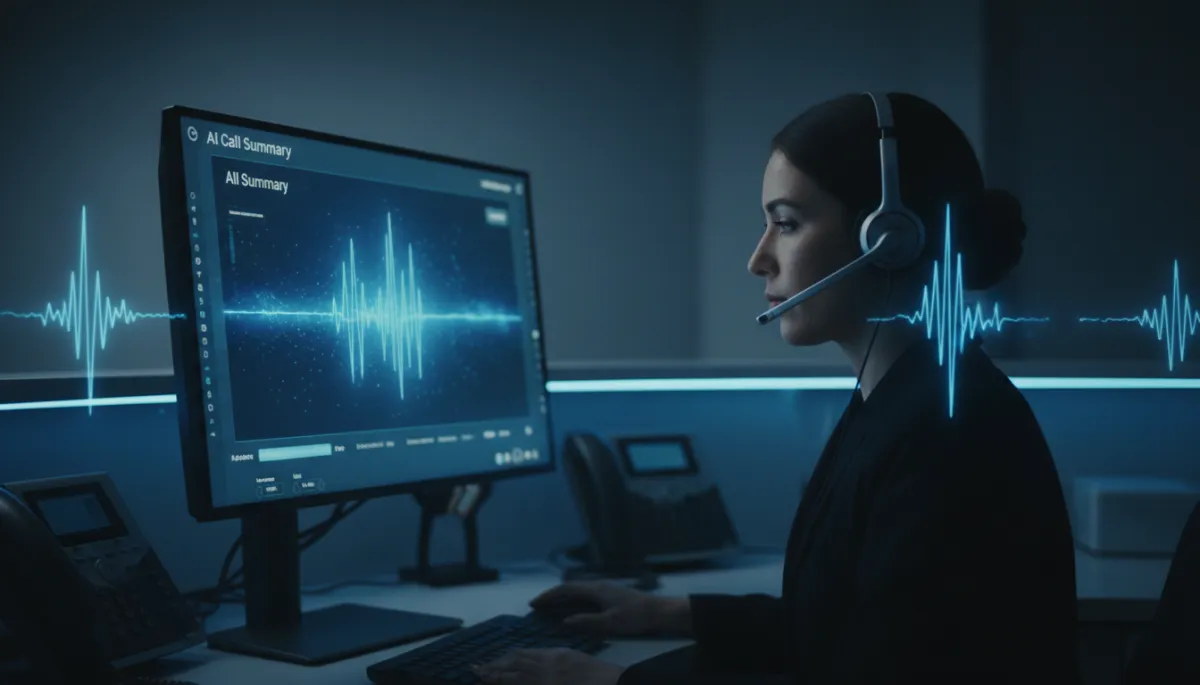
Hybrid support lets AI handle routine tasks while humans focus on nuance and empathy.
Location-level Reporting and Revenue Recovery for Dental Practice Support
For dental groups and DSOs, location-level reporting is non-negotiable. You need to know which offices are answering, converting, and reactivating effectively—and where revenue is leaking. Modern platforms such as Yenza, TrueLark, and Dental Intelligence provide dashboards that break down metrics like answered rate, booking rate, recovered missed calls, and reactivated patients by location, provider, and campaign (Buzzbox Media, 2026).
This visibility is the backbone of revenue recovery. When every missed call, after-hours interaction, and reactivation attempt is tied to a location and outcome, you can quantify recovered production—often in the $50k–$200k/year range per practice for robust AI deployments (DentDesk, 2026; CallSmile, 2026).
interface RevenueEvent {
  locationId: string;
  eventType: 'missed_call_recovered' | 'reactivation_booked' | 'new_patient_booked';
  estimatedProduction: number; // in dollars
  sourceChannel: 'phone' | 'sms' | 'web';
  timestamp: string;
}

async function recordRevenueEvent(event: RevenueEvent) {
  await analyticsClient.track('revenue_event', event);
}

async function getMonthlyRecoveredRevenue(locationId: string): Promise<number> {
  const events = await analyticsClient.query<RevenueEvent>({
    metric: 'revenue_event',
    filters: { locationId },
    dateRange: 'last_30_days',
  });

  return events.reduce((sum, e) => sum + e.estimatedProduction, 0);
}
From a software engineering standpoint, this pattern ensures that your Dental Practice Support stack is not just automating tasks but also generating the data needed to justify investment and continuously improve workflows at each site.
How AI Receptionist Options Support Real-world Dental Workflows
When evaluated as a whole, modern AI Receptionist solutions align closely with core dental workflows:
Inbound demand capture:Missed Call Recovery and After-hours Answering ensure every inquiry is acknowledged and routed, rather than lost to voicemail.
Onboarding and scheduling:Patient Intake Automation and intelligent scheduling reduce friction for new and existing patients while keeping the schedule optimized.
Engagement and retention:text follow-up, patient reactivation, and review workflows keep patients connected between visits and bring overdue patients back into active care.
Growth and profitability:Lead Routing Solutions and location-level reporting allow leadership to focus resources on high-value cases and underperforming offices, driving measurable revenue recovery.
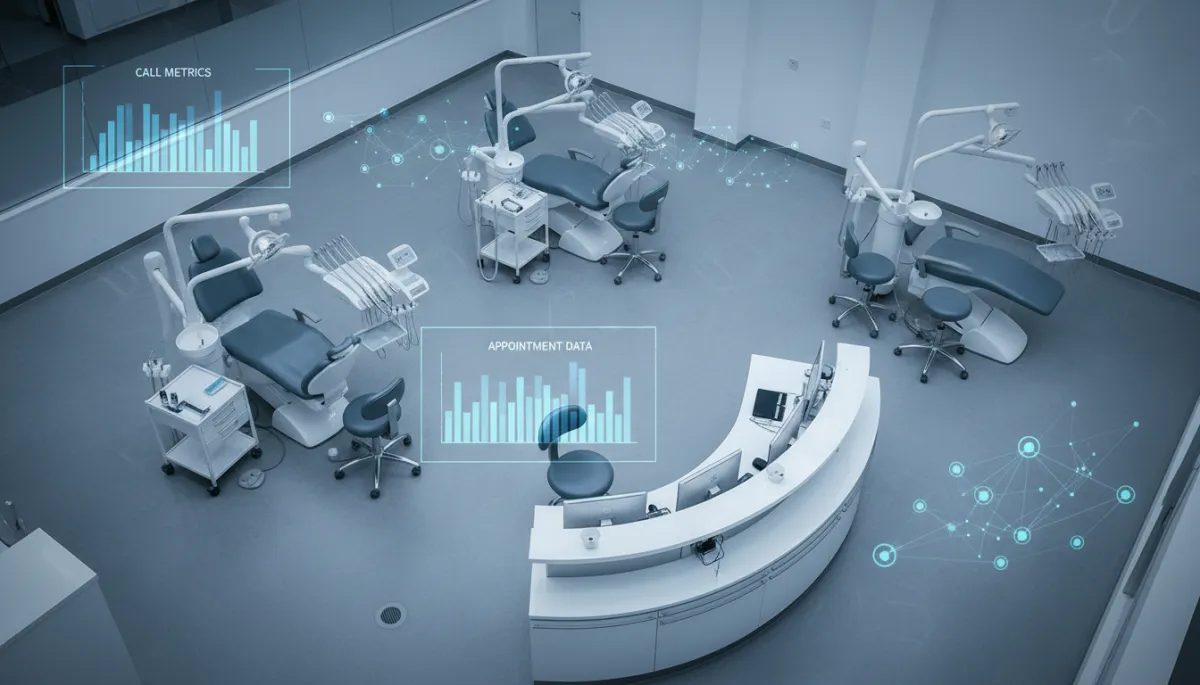
Location-level analytics connect communication performance directly to chairside production.
Closing Thoughts for Technical and Operational Leaders
For dental groups, AI Receptionist technology in 2026 is less about novelty and more about disciplined execution. The winning implementations treat these tools as event-driven, data-rich services embedded in the practice’s core systems. When you design around Missed Call Recovery, After-hours Answering, Patient Intake Automation, text follow-up, high-value lead routing, patient reactivation, and hybrid support, and you anchor everything in location-level reporting, the result is a communication layer that directly supports clinical workflows and reliably drives revenue recovery.
