

AI Receptionist for Multi-Location Dental Groups
AI Receptionist, Dental Groups, Multi-location, Patient Intake, Call Answering, Missed Call Recovery
AI Receptionist for Multi-Location Dental Groups: Modernizing Patient Intake and Call Handling
Multi-location dental groups are under increasing pressure to deliver consistent, high-quality patient experiences while controlling overhead. An AI Receptionist purpose-built for dental organizations can centralize call answering, streamline patient intake, and recover missed calls at scale—without sacrificing the personal touch your brand depends on. This article explores how AI Receptionist solutions help multi-location dental groups and the agencies that support them transform front-desk operations into a strategic advantage.
Why Front-Desk Operations Are Breaking for Multi-Location Dental Groups
As dental groups grow from a single office to five, ten, or dozens of locations, the traditional reception model begins to show its limits. Each practice has its own team, workflows, and call volumes. Peak times vary by location, and staffing is often optimized for in-person patients rather than unpredictable call spikes. The result is inconsistent patient experiences, missed calls, and fragmented patient intake processes that directly impact revenue and reputation.
High call volumes and long wait times: Patients calling to book, reschedule, or ask clinical questions often face extended hold times or voicemail, especially during morning and late-afternoon peaks.
Inconsistent patient intake procedures: Each location may collect different information, leading to incomplete records, duplicated work, and operational friction for both clinical and administrative teams.
Limited visibility across locations: Central leadership often lacks real-time insight into call answering performance, missed call recovery rates, and intake bottlenecks across the group.
These issues are no longer minor inconveniences. For growth-minded dental groups, they translate into lost new patients, underutilized chairs, and inconsistent experiences that make it harder to differentiate in competitive markets. This is precisely where an AI Receptionist tailored to dental workflows can create measurable value.
What Is an AI Receptionist for Dental Groups?
An AI Receptionist is a virtual front-desk assistant that uses conversational AI, telephony integration, and practice management connectivity to handle a broad range of patient interactions. For multi-location dental groups, it operates as a centralized, always-available layer that sits in front of or alongside human reception teams to manage calls, automate patient intake, and ensure no inquiry is left unanswered.
Answers and routes inbound calls for every location, 24/7, in a consistent and professional manner.
Conducts structured patient intake conversations to capture demographics, insurance details, and chief complaints before the patient arrives or is transferred to staff.
Automates missed call recovery by returning calls, sending follow-ups, or collecting information when teams are unavailable or lines are busy.
📌 Key Takeaway: An AI Receptionist is not a generic chatbot. It is a location-aware, policy-driven virtual receptionist that reflects your brand, your scheduling rules, and your clinical priorities across every practice in your group.
Multi-Location Complexity: Where AI Receptionist Delivers the Most Value
Running a single busy dental office is challenging. Running a network of locations multiplies that complexity. A well-designed AI Receptionist can normalize and standardize patient-facing processes across the entire group while still respecting the unique nuances of each practice. This balance between consistency and flexibility is crucial for multi-location operations.

Centralized dashboards give dental group leaders real-time visibility into call answering and intake performance.
Location-Aware Call Answering and Routing
For multi-location dental groups, a single AI Receptionist can intelligently determine which practice a caller is trying to reach based on phone numbers, IVR choices, or natural language. It can then apply location-specific rules such as open hours, provider schedules, and appointment types. This ensures that whether a patient calls your downtown flagship or a suburban satellite office, they experience the same professional greeting and efficient handling, tailored to that location’s capabilities and availability.
Standardized Scripts with Local Customization
AI Receptionist technology allows you to define standard scripts and compliance language across the group—covering topics such as financial policies, infection control messaging, or consent reminders—while enabling location-level variations. For example, one practice may accept walk-ins, while another requires pre-booked appointments. The AI can communicate these nuances reliably, eliminating variability caused by staff turnover or training gaps.
Transforming Patient Intake with AI: From Phone Call to Chair-Ready
Patient intake is one of the most resource-intensive parts of the dental journey. Gathering demographic information, insurance details, medical histories, and consent forms often requires multiple touchpoints and manual data entry. When this process is handled inconsistently across locations, it slows down check-in, frustrates patients, and burdens clinical teams with administrative tasks.
Pre-visit intake by phone: The AI Receptionist can guide new and returning patients through structured questions during the initial call, capturing essential information before an appointment is scheduled or confirmed.
Automated digital follow-up: After a call, the AI can trigger secure links via SMS or email so patients can complete detailed medical histories and consent forms online, synchronized with your practice systems.
Chair-ready information: By the time the patient arrives, the front desk and clinical team already have the key information needed, reducing check-in times and minimizing waiting room congestion.
💡 Pro Tip for Agencies: When positioning AI Receptionist solutions to dental groups, quantify the impact of streamlined patient intake—such as reduced administrative hours per new patient and higher completion rates of medical histories—rather than focusing solely on call automation.
Elevating Call Answering: Always-On, Consistent, and On-Brand
For most dental groups, the phone remains the primary channel for new patient acquisition and existing patient retention. A missed or poorly handled call can mean a lost opportunity. An AI Receptionist specializes in high-quality call answering at scale, ensuring that every caller is greeted promptly and professionally, regardless of time of day or call volume surges.
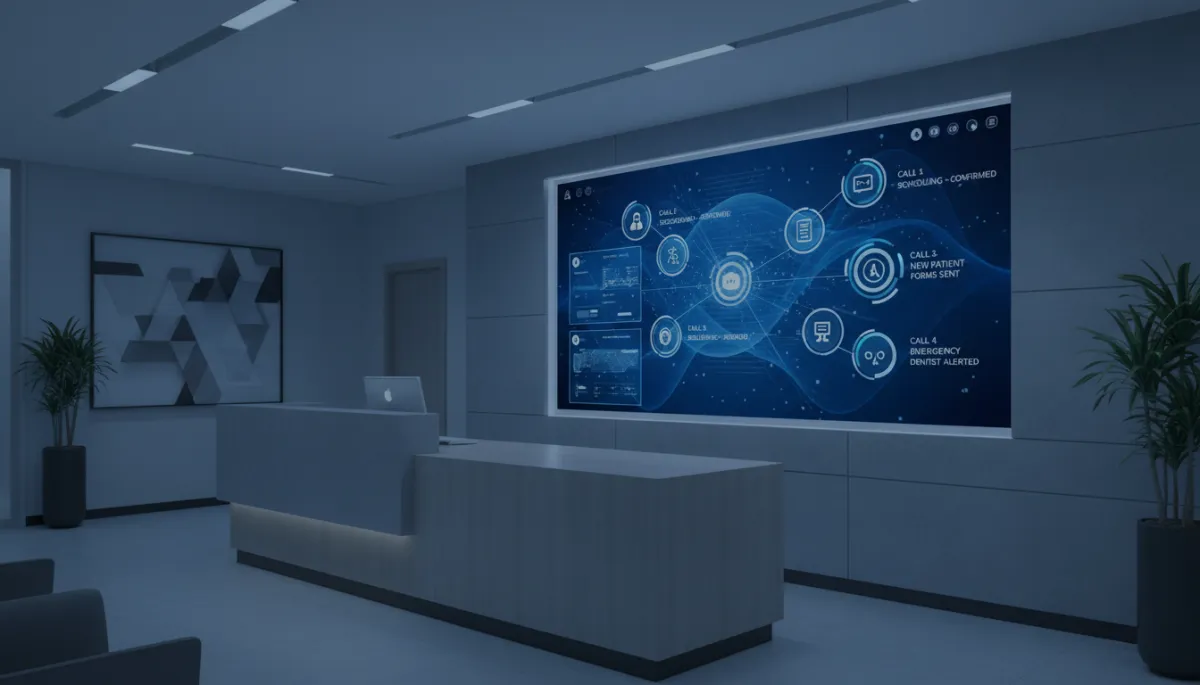
AI call answering absorbs peak volumes so front-desk teams can focus on in-office patients.
Instant response: Calls are answered on the first ring, eliminating the frustration of long holds or voicemail for patients seeking urgent appointments or quick answers.
Intent recognition: The AI Receptionist can distinguish between new patient inquiries, emergency calls, insurance questions, and routine appointment changes, then follow tailored workflows for each intent.
On-brand experience: Custom greetings, tone, and messaging ensure that the AI reflects your group’s brand standards, while maintaining a professional, reassuring presence on every call.
Missed Call Recovery: Turning Lost Opportunities into Booked Appointments
Even with strong staffing, multi-location dental groups inevitably miss calls—during lunch breaks, after hours, or when multiple lines are in use. Historically, these calls either rolled to voicemail or were lost entirely. An AI Receptionist with dedicated missed call recovery capabilities changes that dynamic by proactively re-engaging patients and salvaging opportunities that would otherwise disappear.
Automatically identifies missed calls and triggers outbound callbacks or SMS within minutes, acknowledging the patient and inviting them to continue the conversation.
Uses conversational AI to understand why the patient called—whether to book a new appointment, reschedule, or request clinical guidance—and takes appropriate next steps.
Logs every interaction and outcome in centralized dashboards, giving leadership a clear view of recovered revenue and improved patient satisfaction across all locations.
📌 Key Takeaway: For many dental groups, missed call recovery alone can justify the investment in an AI Receptionist by converting previously lost inquiries into booked hygiene and treatment visits.
Integrating AI Receptionist into Existing Dental Workflows
To realize the full benefits of an AI Receptionist, it must integrate smoothly with the systems and workflows that multi-location dental groups already rely on. This includes telephony infrastructure, practice management software, and communication channels used by clinical and administrative teams.
Telephony and Call Routing Integration
AI Receptionist platforms typically integrate with cloud-based phone systems or SIP trunks, allowing them to answer, transfer, and conference calls as if they were a human receptionist. For multi-location dental groups, this means the AI can serve as the first line of response, intelligently routing calls to specific offices, departments, or on-call clinicians based on predefined rules and real-time availability.
Practice Management and Scheduling Systems
When integrated with practice management systems, the AI Receptionist can check provider schedules, identify open slots, and either propose appointment times directly to the patient or capture preferences for staff to finalize. Over time, this reduces back-and-forth communication and helps balance chair utilization across the group. It also ensures that patient intake data captured by the AI is available where teams need it, without manual re-entry.

Detailed analytics help dental leaders and agencies continuously refine AI-led patient journeys.
Benefits for Dental Groups: Beyond Cost Savings
While labor efficiency is an important outcome, the strategic value of an AI Receptionist for multi-location dental groups extends well beyond reduced staffing costs. It touches every part of the patient lifecycle and supports long-term growth objectives.
Higher new patient conversion: Immediate, professional call answering and proactive missed call recovery significantly increase the percentage of inquiries that become booked appointments across all locations.
Improved patient satisfaction: Consistent experiences, shorter wait times, and smoother intake processes lead to higher satisfaction scores and stronger online reviews, which are critical for multi-location brands.
Reduced staff burnout: By offloading routine call answering and data collection to the AI, front-desk teams can focus on in-person care, complex cases, and high-value patient interactions, improving retention and morale.
Actionable operational insights: Centralized analytics across all practices provide a clear view of demand patterns, call drivers, and bottlenecks, enabling better staffing and marketing decisions.
How Agencies Can Package and Position AI Receptionist for Dental Clients
For marketing and technology agencies serving dental groups, AI Receptionist solutions open a new category of high-impact, recurring services. Rather than selling one-off campaigns, agencies can partner with AI providers to deliver a measurable improvement in patient acquisition and experience across multi-location portfolios.
Bundle AI Receptionist with call tracking, digital advertising, and conversion optimization to demonstrate how every marketing dollar translates into answered calls and booked appointments.
Use missed call recovery and patient intake metrics as core KPIs in quarterly business reviews, showcasing tangible gains in revenue and patient satisfaction for each location.
Develop best-practice playbooks for multi-location rollout, including training, script optimization, and integration roadmaps, to position your agency as a strategic partner—not just a vendor.
💡 Pro Tip for Multi-Location Groups: Involve both operations and marketing stakeholders when evaluating AI Receptionist platforms. The most successful deployments align patient experience, brand voice, and operational efficiency from day one.
Implementation Considerations and Best Practices
Deploying an AI Receptionist across a multi-location dental group requires thoughtful planning, clear governance, and a phased approach. The goal is to minimize disruption while quickly demonstrating value to both staff and patients.
Pilot with a subset of locations: Start with a small group of practices that represent different call volumes and patient demographics. Use this pilot to refine scripts, routing rules, and intake flows before rolling out broadly.
Engage front-desk teams early: Position the AI Receptionist as a support tool, not a replacement. Involve staff in designing workflows and gather their feedback during the pilot to build trust and adoption.
Define clear escalation paths: Ensure that callers can always reach a human when needed, especially for clinical emergencies, complex billing questions, or sensitive conversations. This balance maintains patient confidence while maximizing automation benefits.
The Future of Patient Communication in Multi-Location Dentistry
As AI technologies mature, the role of the AI Receptionist in multi-location dental groups will expand beyond voice calls. Expect deeper integration with chat, SMS, and patient portals, enabling a unified communication layer that follows patients across channels and locations. Advanced analytics will further refine how groups allocate staff, open new offices, and design patient journeys that maximize lifetime value.
For businesses and agencies supporting dental groups, the message is clear: AI Receptionist solutions are no longer experimental. They are becoming a core component of modern, scalable operations, particularly where multi-location complexity, patient intake demands, and call answering expectations intersect. By embracing AI-driven call answering, structured patient intake, and proactive missed call recovery, dental groups can protect every opportunity, deliver consistent experiences, and position themselves for sustainable growth in an increasingly competitive landscape.
