
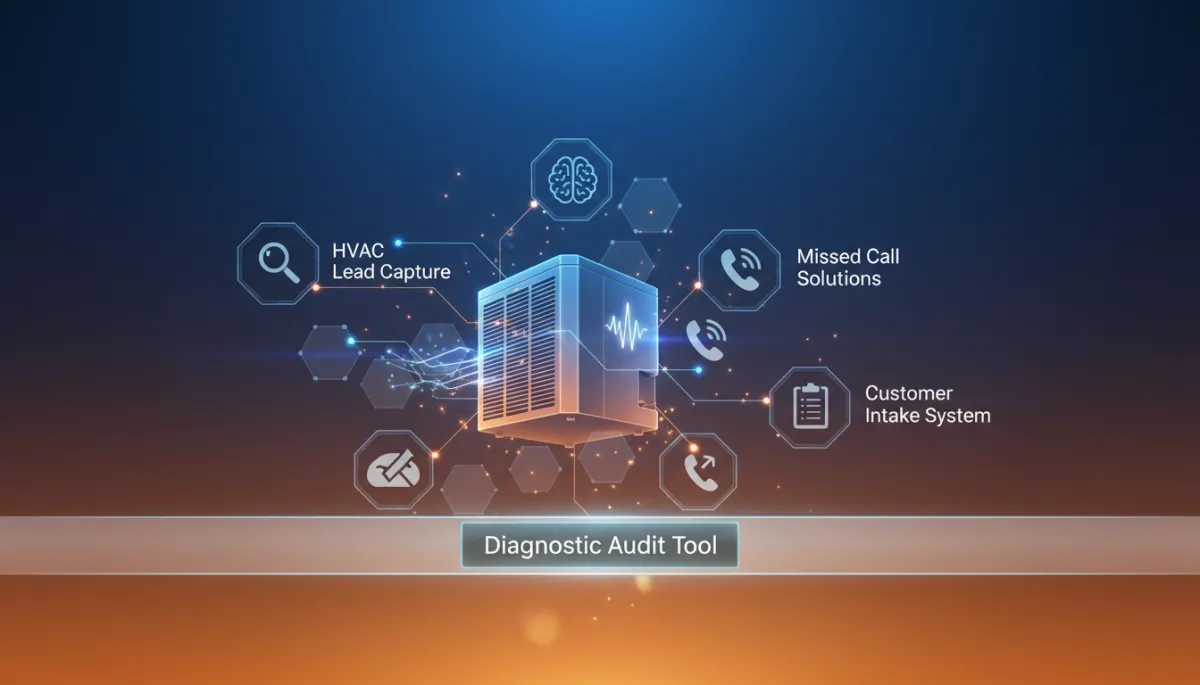
AI Call Answering for HVAC: Never Miss a Lead
AI Call Answering, HVAC Lead Capture, Missed Call Solutions
AI Call Answering for HVAC Companies That Cannot Afford to Miss the Next Call
In today’s home services market, HVAC companies are investing heavily in marketing, advertising, and brand-building—yet many still lose their most valuable opportunities at the simplest point of failure: the phone. When a homeowner’s system fails in the middle of a heat wave, the first company that answers wins the job. AI Call Answering is rapidly becoming the missing link between expensive lead generation and actual booked revenue, especially for HVAC businesses that simply cannot afford to miss the next call.
As digital marketing costs climb and competition intensifies, every ring represents real money already spent—on Google Local Service Ads, PPC, SEO, or social campaigns. Industry data shows leading HVAC operators reinvesting 8–12% of revenue into marketing, with the majority of bookings driven by high-intent search channels. Yet if the call goes unanswered, that investment evaporates. Missed Call Solutions powered by AI ensure that every inbound opportunity is captured, qualified, and routed, even when your office is overloaded or after hours. This is where modern Home Service Automation moves from “nice to have” to mission-critical.
For agencies and B2B partners that support HVAC contractors, this shift is equally important. Your campaigns can be perfectly optimized, but if your client’s phones roll to voicemail, your performance metrics suffer and churn risk rises. By recommending or bundling AI Call Answering as part of your service stack, you help HVAC clients close the loop—from click to call to booked job—and protect the ROI of every marketing dollar they spend. In 2026 and beyond, the winners in HVAC will be those who treat HVAC Lead Capture as an end‑to‑end system, not a collection of disconnected tools.
Why Missed Calls Are So Expensive for HVAC Companies
HVAC demand is highly seasonal and highly urgent. Research shows that 60–70% of annual residential service revenue often lands in a 12‑week cooling window, with additional spikes during heating season. During these peaks, office staff are overwhelmed, technicians are in the field, and every line is lit up. When calls roll to voicemail or are placed on long holds, homeowners simply dial the next contractor on Google. Each lost call is not just a missed appointment—it is a lost acquisition cost, a lost lifetime customer, and often a lost replacement opportunity down the line. Revenue Recovery HVAC strategies must begin with answering every single inbound inquiry.
At the same time, marketing benchmarks show that Google Local Service Ads, PPC, and other digital channels are driving the bulk of booked jobs. Those clicks are expensive, and the economics only work if you convert at a high rate. Fast response is critical—HVAC firms can capture up to 50% more opportunities by replying to leads within an hour, and in many emergency scenarios, the real window is measured in minutes. AI Call Answering ensures that the first interaction always happens in real time, with no lag between the customer’s moment of need and your company’s response. That alone dramatically increases the return on your ad spend and stabilizes your revenue curve during volatile seasons.
Beyond the direct cost of missed calls, there is the brand impact. Consistently unanswered phones create negative reviews, lower star ratings, and weaker performance in local search. In contrast, a reliable Customer Intake System—staffed by an intelligent virtual agent 24/7—signals professionalism, dependability, and scale. It helps smaller HVAC shops compete with larger brands, and it gives agencies a measurable lever to improve downstream conversion metrics for their clients. In a market where only about 12% of HVAC firms currently use AI but 85% plan to adopt it by 2025–2026, early movers in Missed Call Solutions gain a distinct competitive advantage.
How AI Call Answering Enhances HVAC Lead Capture
Effective HVAC Lead Capture is no longer just about generating inquiries; it is about converting every interaction into a structured opportunity. AI Call Answering systems use natural language processing to understand what callers need—whether it is emergency repair, routine maintenance, or a system replacement quote—and guide them through a tailored conversation. Instead of a generic voicemail box, callers experience a responsive, conversational assistant that can ask clarifying questions, capture contact details, and secure a time window for service or follow‑up. This transforms raw phone traffic into actionable, prioritized leads inside your CRM or dispatch platform.
Because the AI is integrated with your customer database, it can recognize repeat customers, pull up service history, and tag each call appropriately—“no cool,” “no heat,” “maintenance plan,” “estimate request,” and more. This level of structured intake feeds your sales and operations teams with better data, enabling more efficient scheduling, smarter routing, and better technician preparation. For agencies, it also means cleaner attribution and more accurate reporting on which campaigns are generating high‑value calls. Instead of relying on rough call counts, you can see which sources are driving booked jobs, replacements, or membership enrollments, all supported by a robust Customer Intake System.
Another advantage is scale. During peak months, call volume can spike dramatically. Human teams struggle to keep up, but AI does not. Home Service Automation allows your call handling capacity to expand instantly, managing multiple conversations in parallel without sacrificing quality. Every new marketing push—whether it is a seasonal promotion, a rebate campaign, or a targeted social ad set—can be supported by an intake layer that will not crack under pressure. This is the foundation of dependable Missed Call Solutions: not just catching overflow, but ensuring no marketing surge overwhelms your ability to answer and convert.
Improving Customer Intake with AI‑Driven Conversations
Traditional intake processes in HVAC offices are vulnerable to inconsistency. Different CSRs ask different questions, capture different levels of detail, and may or may not follow the same scripts. Under stress, even the best teams make mistakes—missing contact information, failing to ask about system age, or forgetting to offer maintenance plans. An AI‑powered Customer Intake System standardizes every call, ensuring that critical data points are always captured and that the conversation reflects your brand’s best practices. The result is a more professional, predictable experience for homeowners and a more reliable dataset for your business and agency partners to work with.
Modern AI Call Answering platforms can also handle multi‑channel intake—phone, SMS, and even web chat—so that homeowners can reach you in the way that is most convenient for them. A homeowner who taps a click‑to‑call ad might speak to the AI assistant, while another who completes a form on your website could receive an immediate automated call or text to confirm details and schedule. This unified, always‑on intake layer dramatically reduces the leak between initial interest and booked appointment. By 2026, as AI becomes more deeply integrated into HVAC operations, these systems will also tie into predictive maintenance and IoT data, enabling even more personalized and proactive conversations with customers.
For agencies managing lead generation, this level of automation offers a powerful advantage. You can design campaigns knowing that every response—no matter the hour—will trigger a structured, branded interaction. Instead of leads sitting in inboxes or spreadsheets, they are immediately engaged by your client’s Home Service Automation stack. The AI can ask qualifying questions, segment leads by urgency, and even trigger different workflows for emergency service, tune‑ups, or replacement consultations. This elevates your role from “traffic driver” to architect of a complete HVAC Lead Capture and intake ecosystem that consistently turns ad spend into revenue.
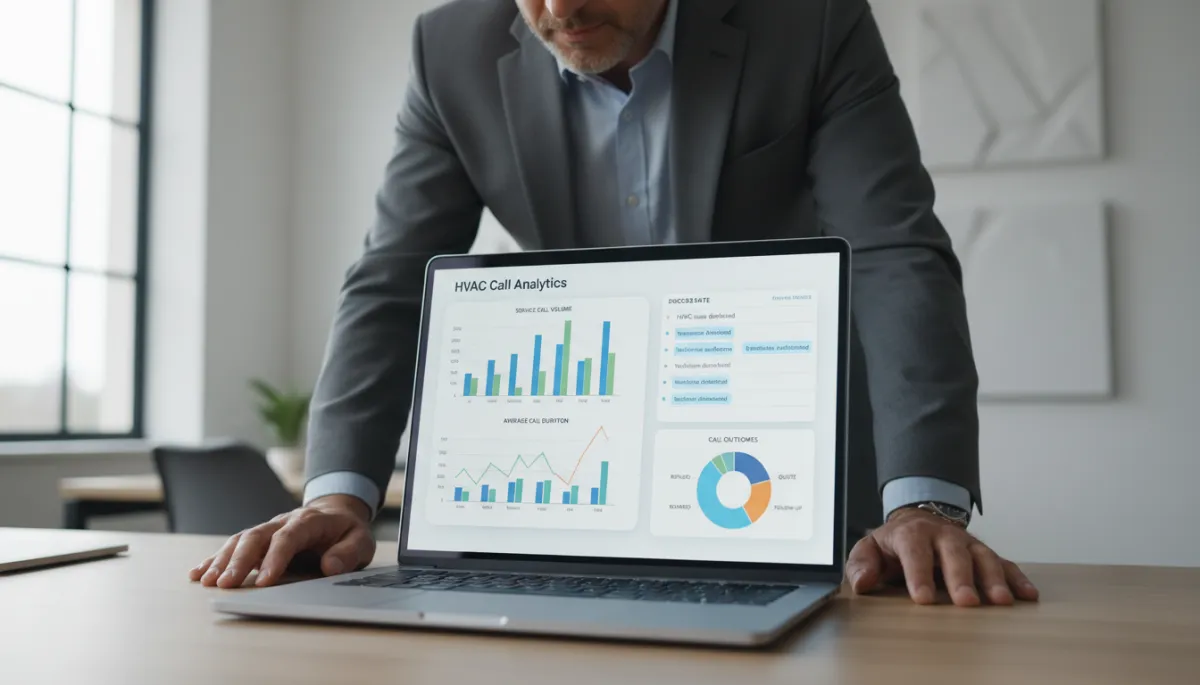
Call analytics from AI Call Answering reveal exactly which leads turn into booked HVAC jobs.
Revenue Recovery HVAC: Turning Missed Calls into Measured Growth
Revenue Recovery HVAC strategies focus on plugging the holes in the customer journey where money quietly leaks out—missed calls, slow follow‑up, untracked referrals, and dormant databases. AI Call Answering is a direct response to one of the biggest and most visible of these leaks. By ensuring that every inbound call is answered, documented, and routed, you reclaim revenue that previously disappeared without a trace. But the benefits go further when AI is combined with CRM and marketing automation. Now, every call becomes the start of a lifecycle: initial booking, follow‑up, maintenance plan enrollment, and eventual replacement opportunities, all orchestrated through a connected system.
From a financial perspective, this is crucial. Acquiring new customers can cost five times more than retaining existing ones, and roughly 70% of revenue in HVAC often comes from repeat customers. An AI‑enabled Customer Intake System does more than book the first job; it also ensures that each customer is tagged correctly for future outreach. When the AI captures details about system age, equipment type, and service history, that data can feed predictive campaigns—reminding customers about tune‑ups, promoting efficiency upgrades, or surfacing financing offers at the right time. Over time, your Home Service Automation stack becomes a revenue engine, not just a cost center.
Agencies can position themselves at the center of this transformation. Rather than reporting only on leads and clicks, you can help clients model the full economics of Missed Call Solutions and AI‑driven intake. For example, quantifying the number of calls previously lost during peak season, estimating the average ticket value, and projecting the revenue recovered when those calls are now answered 24/7. By aligning marketing strategy with a robust HVAC Lead Capture and intake framework, you create a compelling business case for AI adoption that resonates with owners, operations leaders, and finance teams alike.
Practical Implementation: What Businesses and Agencies Should Look For
For HVAC owners and agency partners evaluating AI Call Answering options, the goal is not simply to add another tool—it is to architect a complete Customer Intake System that integrates tightly with existing operations. Key capabilities to prioritize include natural language understanding tuned for HVAC terminology, two‑way integration with CRM or dispatch software, and configurable call flows for different service types. The AI should be able to schedule appointments, log notes, update customer records, and trigger follow‑up sequences without manual re‑entry. This level of integration is what turns call handling from a cost center into an automated workflow that supports Revenue Recovery HVAC goals.
Equally important is analytics. A modern Home Service Automation platform should provide detailed reporting on call volume, answer rates, booking rates, call reasons, and campaign attribution. Agencies can use this data to refine media strategy—shifting budget toward channels that drive high‑value booked jobs—and to demonstrate ROI to clients in concrete terms. For HVAC businesses, these insights reveal staffing needs, peak demand patterns, and opportunities to launch targeted offers or membership campaigns. When HVAC Lead Capture and AI intake are instrumented in this way, decision‑making becomes data‑driven rather than guesswork.
Finally, consider the customer experience. The best Missed Call Solutions do not feel robotic; they feel responsive, clear, and helpful. Voice tone, script design, and escalation logic all matter. The AI should know when to hand off to a human, how to reassure a distressed homeowner, and how to set expectations about arrival windows or pricing. Agencies can add value by collaborating on these scripts, aligning them with brand voice, and testing variations to improve conversion. When done well, AI Call Answering becomes an extension of your client’s brand—a consistent, high‑quality first impression that supports both immediate bookings and long‑term loyalty.
Positioning AI Call Answering as a Strategic Advantage
As AI adoption accelerates across the HVAC sector, the gap will widen between companies that treat AI Call Answering as a strategic asset and those that see it as a temporary patch for staffing issues. For forward‑thinking contractors and their agency partners, the opportunity is to embed AI at the core of HVAC Lead Capture, intake, and follow‑up. That means designing campaigns, offers, and service processes with the assumption that every call will be answered instantly, every data point will be captured, and every interaction can trigger intelligent automation. In this model, humans focus on high‑value conversations and complex problem‑solving, while AI handles the repetitive, time‑sensitive front line at scale.
For agencies, integrating Home Service Automation and Missed Call Solutions into your offerings is also a powerful differentiator. Rather than competing solely on ad management fees or creative, you can present a comprehensive growth system that spans from first impression to booked job to long‑term retention. This positions you as a strategic partner in Revenue Recovery HVAC and growth, not just a vendor. It also creates stickier client relationships, as your value is tied to measurable business outcomes rather than isolated marketing metrics. In a crowded agency landscape, this kind of integrated, performance‑driven positioning is increasingly essential.
Ultimately, HVAC companies that cannot afford to miss the next call need more than extra phone coverage; they need a resilient, intelligent Customer Intake System that protects every marketing dollar and every opportunity. AI Call Answering delivers that protection, while also improving customer experience, enhancing data quality, and enabling sophisticated automation across the customer lifecycle. For both contractors and agencies, the question is no longer whether AI will transform call handling—it is how quickly you will leverage it to secure your competitive edge in the seasons ahead.
