
AI After-Hours Answering & Revenue Recovery for Local and Nationwide Practices
AI Answering, After-hours Support, Revenue Recovery, Local Practices, Patient Engagement
AI After-Hours Answering & Revenue Recovery for Local and Nationwide Practices
After-hours calls are no longer “nice-to-have” touchpoints. For healthcare practices and agencies that support them, they are a primary driver of patient engagement, reputation, and revenue recovery. AI Answering and intelligent after-hours support now make it possible to capture these missed opportunities at scale—without burning out front desk teams or relying on outdated voicemail systems.
Why Capturing Missed Opportunities Outside Business Hours Matters
For many patients, the only time they can call is early morning, late evening, or over the weekend. Each unanswered call in these windows is more than an inconvenience—it is a missed opportunity for a new appointment, a follow-up visit, or a high-value procedure. As expectations move toward 24/7 responsiveness, patients are far less likely to wait for a callback; they simply try the next provider or urgent care center that picks up.
Industry research from firms such as Gartner and McKinsey points to a future where AI handles a significant share of customer interactions, especially after-hours, and where organizations that respond quickly win loyalty and revenue. Practices that continue to treat after-hours calls as low priority risk silent leakage from their patient base and a gradual erosion of market share in their local communities and national networks.
The Limitations of Voicemail in a 24/7 Service World
Traditional voicemail was designed for a different era. Today, it introduces friction at every step of the patient journey. Patients must decide whether to leave a message, hope someone listens promptly, and then wait for a callback that may or may not arrive at a convenient time. Many never complete the process, resulting in lost appointments and stalled revenue recovery efforts.
No real-time engagement: Voicemail cannot answer questions, guide next steps, or book appointments on the spot.
Limited visibility: Messages are often scattered, unstructured, and difficult to track or prioritize for follow-up.
Inconsistent patient experience: Response times vary widely depending on staffing, workload, and manual processes.
In a landscape where AI-driven customer service is rapidly becoming the norm, continuing to rely on voicemail alone can send an unintended message: “We will get to you when we can.” For patients with urgent questions, complex conditions, or competing options, that is rarely acceptable.

Voicemail alone often turns high-intent patient calls into silent, unrecoverable revenue loss.
How AI Answering Elevates Response Speed, Visibility, and Patient Experience
Modern AI Answering platforms use advanced natural language understanding to engage callers conversationally, 24/7. Instead of a beep, patients reach an intelligent, branded assistant that can triage needs, answer common questions, and capture all relevant details for clinical and scheduling workflows. According to industry analyses from Forbes and McKinsey, these AI solutions are increasingly capable of handling complex, context-aware interactions while maintaining a human-like tone.
Faster response: Calls are answered immediately, even during peak after-hours periods, reducing abandonment and improving patient satisfaction.
Greater visibility: Every interaction is structured, time-stamped, and surfaced through dashboards and alerts, giving leadership a clear view of demand and missed opportunities.
Enhanced experience: Patients receive clear guidance—whether that is booking a visit, routing to on-call support, or accessing telehealth—without feeling ignored or rushed.
💡 Pro Tip: Combine AI Answering with your scheduling and messaging systems so that every after-hours interaction can convert directly into booked appointments and documented follow-up tasks.
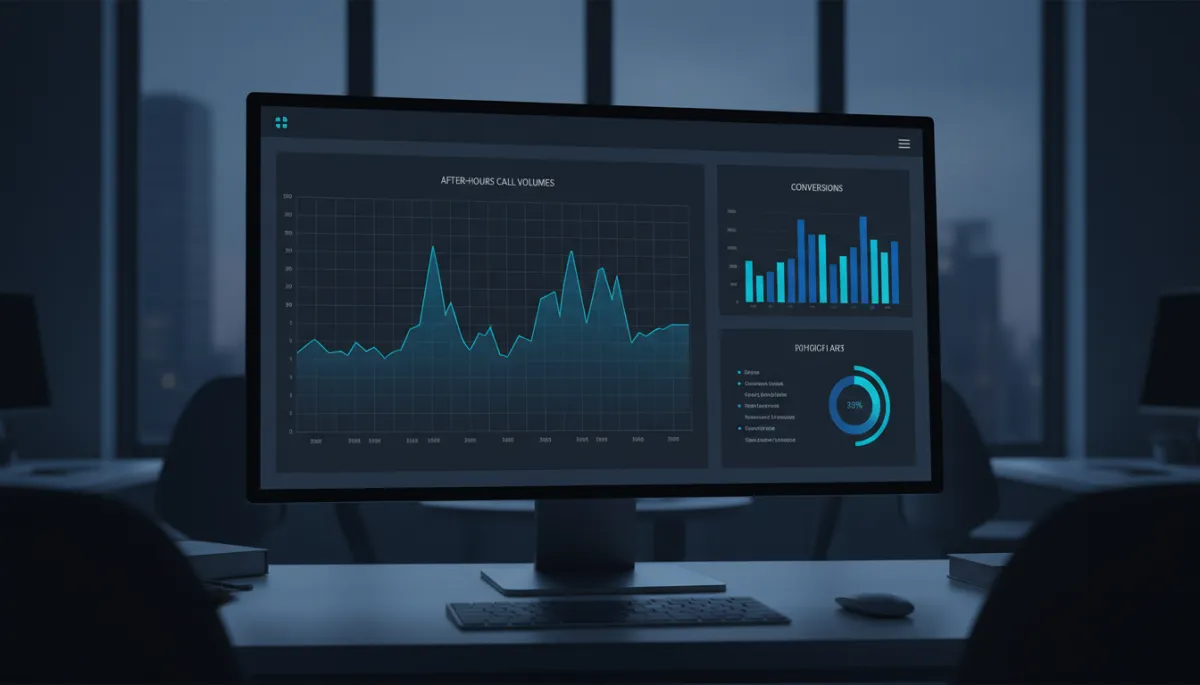
Real-time analytics reveal exactly how after-hours engagement drives appointment volume and revenue recovery.
Revenue Recovery for Local and Nationwide Practices
Whether you operate a single-location clinic or manage a multi-state network, after-hours support is now a critical component of revenue recovery. Industry sources on revenue cycle management highlight AI and automation as core levers for improving financial outcomes, reducing leakage, and accelerating cash flow. AI Answering aligns directly with these objectives by converting previously lost calls into scheduled visits and timely payments.
Local practices: Gain a competitive edge in crowded markets by being the practice that always “picks up,” even when the office is closed, strengthening community reputation and patient loyalty.
Nationwide groups and DSOs/MSOs: Standardize after-hours experiences across locations, reduce dependency on fragmented answering services, and surface network-wide insights into demand patterns and lost revenue.
By embedding AI Answering into your broader revenue cycle strategy—alongside telehealth, patient portals, and RCM analytics—you create a consistent, scalable engine for capturing value that would otherwise slip away during evenings, weekends, and holidays.
Supporting, Not Replacing, Front Desk Teams
A common concern is that AI will replace human staff. In practice, effective AI Answering solutions are designed to support front desk teams, not displace them. They handle repetitive, time-sensitive tasks when staff are unavailable, and they prepare structured information so that team members can work more efficiently when they return.
Reduce morning call backlogs by capturing key details overnight and routing them into clear queues.
Free staff to focus on high-value, empathetic interactions rather than chasing voicemails and disconnected messages.
Provide leadership with data to right-size staffing, training, and workflows based on actual demand.

When AI handles the night shift, front desk teams start each day focused and prepared.
How to Evaluate Your Current After-Hours System
To understand whether your current approach—voicemail, live answering service, or a mix of both—is working, it is essential to evaluate it through the lens of missed opportunities and revenue recovery. Consider the following questions:
How many after-hours calls do you receive each week, and how many convert into scheduled appointments or billable encounters?
What percentage of voicemails or messages are returned within one business day, and how often do you reach the patient on the first attempt?
Do you have clear reporting on after-hours demand by location, service line, and patient type—or are you operating in the dark?
How consistent is the experience across your network, and does it reflect the standard of care you aim to deliver during regular hours?
📌 Key Takeaway: If you cannot quantify after-hours demand, conversion, and leakage, you cannot fully control your revenue recovery performance.
Take the Next Step: Request a CRF Diagnostic Audit at Client Revenue Flow
AI Answering and intelligent after-hours support are no longer experimental—they are quickly becoming standard for practices that want to protect every patient interaction and maximize revenue recovery. The question is not whether to adopt AI, but how to deploy it strategically across local and nationwide operations without disrupting care or overwhelming staff.
Client Revenue Flow specializes in helping healthcare organizations evaluate and optimize their after-hours systems. Through a CRF Diagnostic Audit, our team analyzes your current call flows, voicemail performance, and missed opportunity patterns, then outlines a practical roadmap for AI-powered after-hours support that aligns with your clinical, operational, and financial goals.
If you are ready to move beyond voicemail, protect your front desk teams, and turn after-hours calls into measurable growth, request a CRF Diagnostic Audit at Client Revenue Flow today. Gain the clarity, data, and strategy you need to transform after-hours support into a consistent driver of patient engagement and revenue recovery.
